The Alpha had users. It also had instructions.
A tester opened the Chrome extension I had promised before Thanksgiving and got an error. The app would not let her log in either.
The explanation was straightforward: we had taken the backend down for about an hour to do maintenance. When it came back, I said both the app and extension should be working.
Two days later, we were still checking versions.
“Mind removing and reinstalling with this link,” I wrote. “Just want to triple ensure it's the right version.”
I sent the direct Chrome Web Store page again.
This was the practical shape of early access. The mobile app existed. The extension existed. Outside people could use both of them. They could also land on the wrong build, hit a maintenance window, fail to log in, or need a founder to send the install link one more time.
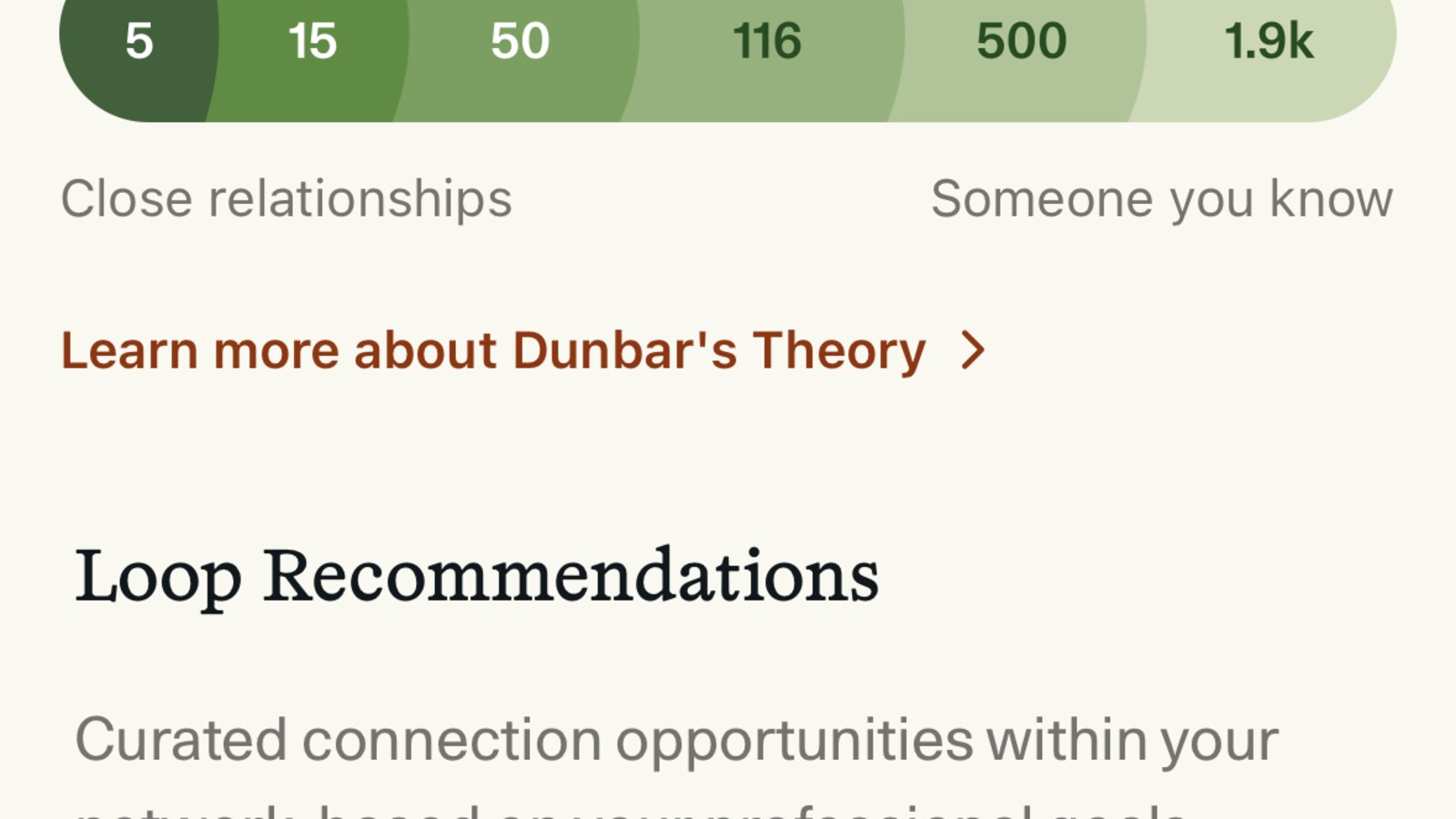
The product itself was getting clearer. A December 7 screenshot showed Loop sorting a network from close relationships to people farther away, then presenting recommended connections based on professional goals.
The first-time experience was not clear enough.
When another early user had trouble getting set up, I admitted that we were not ready to release the Alpha more broadly. We were focused on finishing the email and calendar integrations and the backend work before polishing onboarding.
The intended flow sounded simple when I wrote it down:
- Download the mobile app.
- Log in with an email address.
- Open a magic link that connected LinkedIn and installed the extension.
Once inside, a tester could review recommendations, add a note through the voice assistant, create a follow-up, search profiles, and explore automatically created groups.
Getting inside was the problem.
The product was real enough to put in someone else's hands and unfinished enough that those hands needed help at every step.
Remove. Reinstall. Try again.