I proposed a no-drop race for the NYCRUNS Brooklyn Half.
There were three of us. The rough idea was to run around 1:23 to 1:25, start a little easier, and give ourselves room to finish strong. The important part was the part that sounded least like racing: if one person fell back, we all fell back.
This is a suspicious agreement among runners. Everyone says the pace is relaxed. Then the watch beeps, somebody feels good, and the relaxed run quietly becomes a race with witnesses.
We kept checking the plan during race week. Were we still doing this? How fast were we actually running? Nobody wanted to be the person who misunderstood the assignment at the starting line.
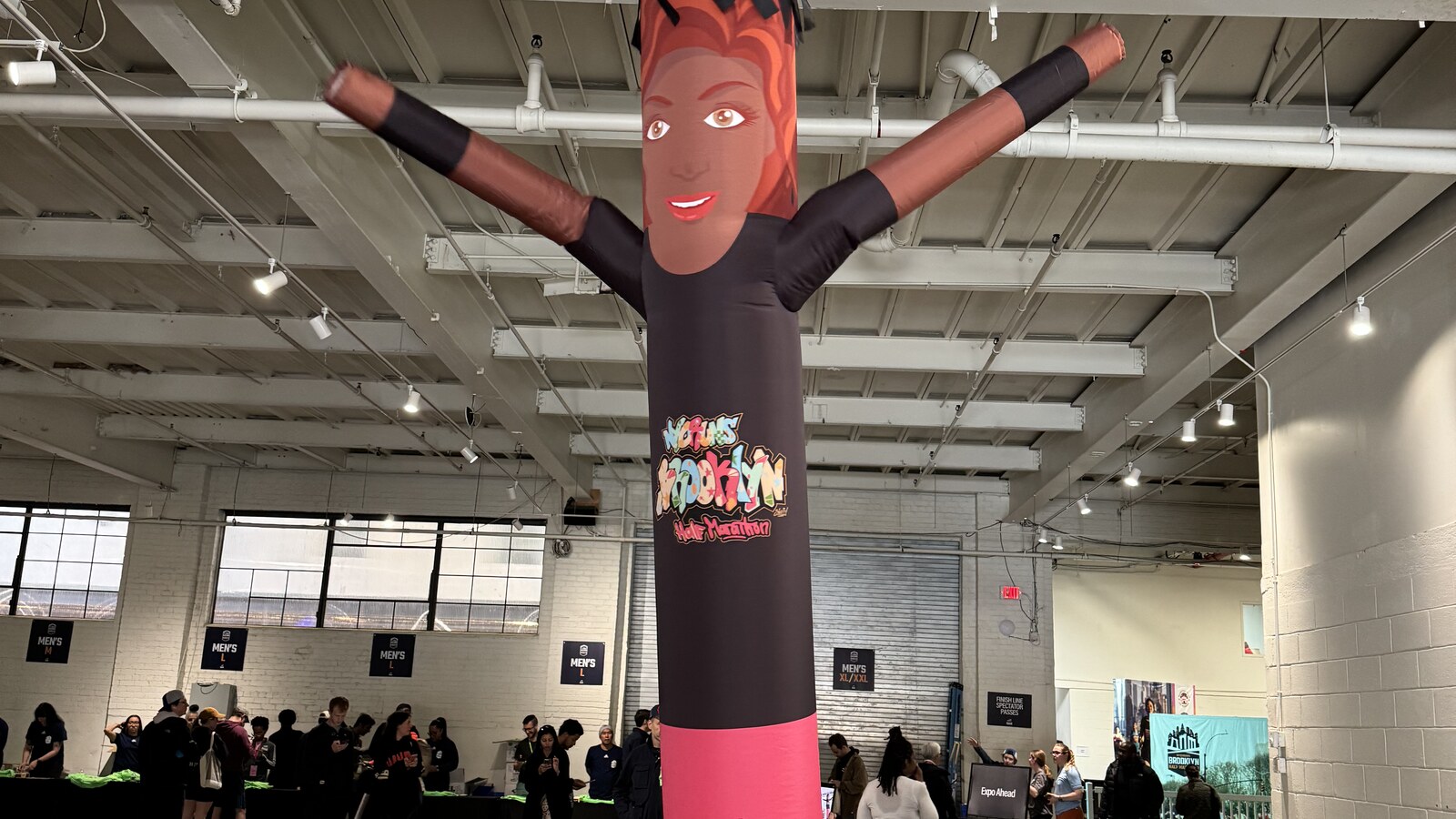
I went to the expo on Saturday to pick up my bib. The room had a giant inflatable runner dancing over packet pickup, which was about the right amount of restraint for the day before a half marathon.
Sunday morning, we ran together.
The no-drop rule changed the job. I did not need to squeeze every second out of the course. I needed to pay attention to the other two people, keep the effort honest, and make sure the group still existed thirteen miles later.
Afterward I sent the shortest race report I could manage: “Best race I've ever done. So much fun.”
That was the whole review. I was sore the next day, but the time was already less interesting than the fact that we had made a race feel like a long run with friends.
I like racing hard. I also like discovering that the clock is not always the part that makes a race count.