It finally rained.
Not a little mist. Real rain. Little stinging rain and big old fat rain, as Forrest Gump would put it.
We had made it more than two-thirds of the way across the country with almost none. That run ended at the Wabash Cannonball Bridge.
The bridge was sketchy before it got wet. The rain did not improve it.
Day 20 had taken us across the Mississippi River and into Illinois. The number left on the route finally dropped below 1,000 miles. Three digits felt completely different after starting at 2,913.
It was still a thousand miles.
That is one of the strange things about a long trip. A distance can be both a huge accomplishment and an annoying amount of work left. We had crossed most of the country. We also had to get up the next morning and keep riding.
Day 21 put us on the Tunnel Hill State Trail. After weeks of highways, shoulders, farm roads, and whatever Interstate 40 was, a rail trail felt almost luxurious. No trucks doing 75. Trees. A tunnel. An actual route built for bikes.
The post said Lincoln was not even born there and included a secret-tunnel joke. Historical precision remains one of our core values.
Then Day 22 got wet.
Rain changes every small job. The road gets slick. Painted lines matter more. Braking changes. Clothes get heavy. Glass and junk on the shoulder get harder to see. Stopping makes you cold, but riding keeps throwing water at you.
The bikes collect everything. Water, dirt, grit, whatever the tires pick up. At the next stop, the work is not over. Clothes need somewhere to go. Shoes need a chance to dry. Chains need attention. Lights and bags need checking. Tomorrow's dry layer has to stay dry.
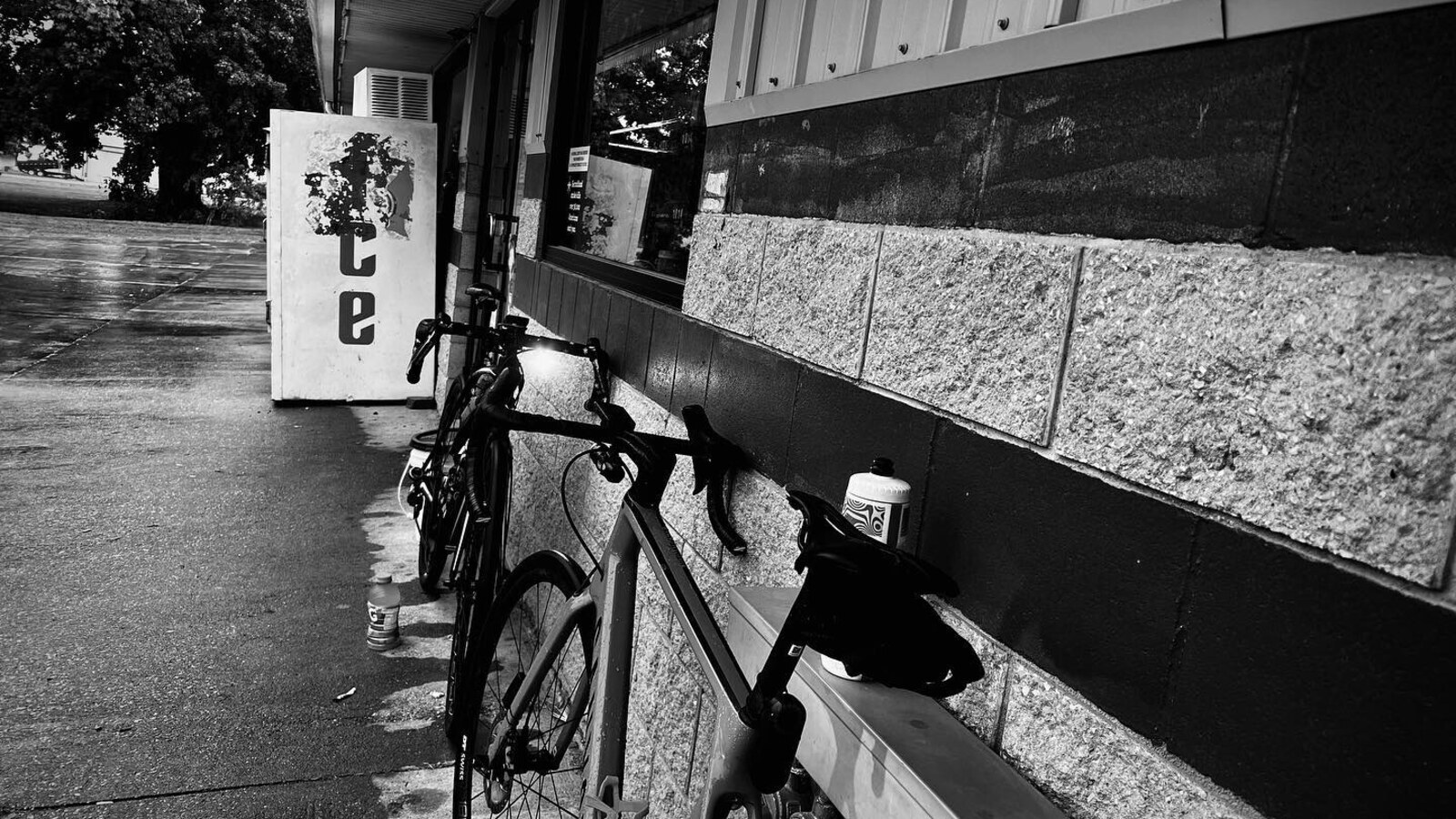
The photo is not heroic. Two bikes lean against a convenience-store wall beside an ice machine. Bottles and gear are sitting around. The pavement is wet. Nobody is celebrating.
That is exactly why I like it.
Most endurance stories get compressed into a finish photo and a number. The real thing is a lot of scenes like this. Bikes against a wall. Somebody inside buying food. Somebody checking the weather. Everybody wondering how long the rain is going to last.
The equipment spreadsheet had rain gear. Very responsible. Clicking a box next to rain gear in New York is not the same as putting it on beside a wet bridge hundreds of miles from home.
Still, the system worked. The lights worked. The bags kept enough things dry. We found food. We kept moving.
That has been the whole trip. Problems show up at road speed. We deal with the one in front of us, then ride until the next one appears.
The Mississippi was behind us. Illinois gave us a rail trail and a tunnel. The Wabash Cannonball Bridge gave us the first real rain.
Indiana is next.
I would like it to be dry.