Arkansas only gets one post.
Nothing personal. We were busy.
Days 18 and 19 became one update: Arkansas, attack dogs, and an armadillo. By the time it went up, we were already in Doniphan, Missouri.
Day 17 had gotten us to Fayetteville and introduced the phrase “it's an armadiller.” I do not know why that was funny. It just was. There were bikes leaning against a huge hay bale, a lot of rolling road, and the very specific feeling that the flat middle of the country had ended.
Then came the dogs.
Dogs behave differently when you are moving past their house on a bicycle. Some watch. Some bark. Some decide the Tour de France has arrived in rural Arkansas and they have been personally selected for the chase group.
You can outride some dogs. You cannot negotiate with any of them.
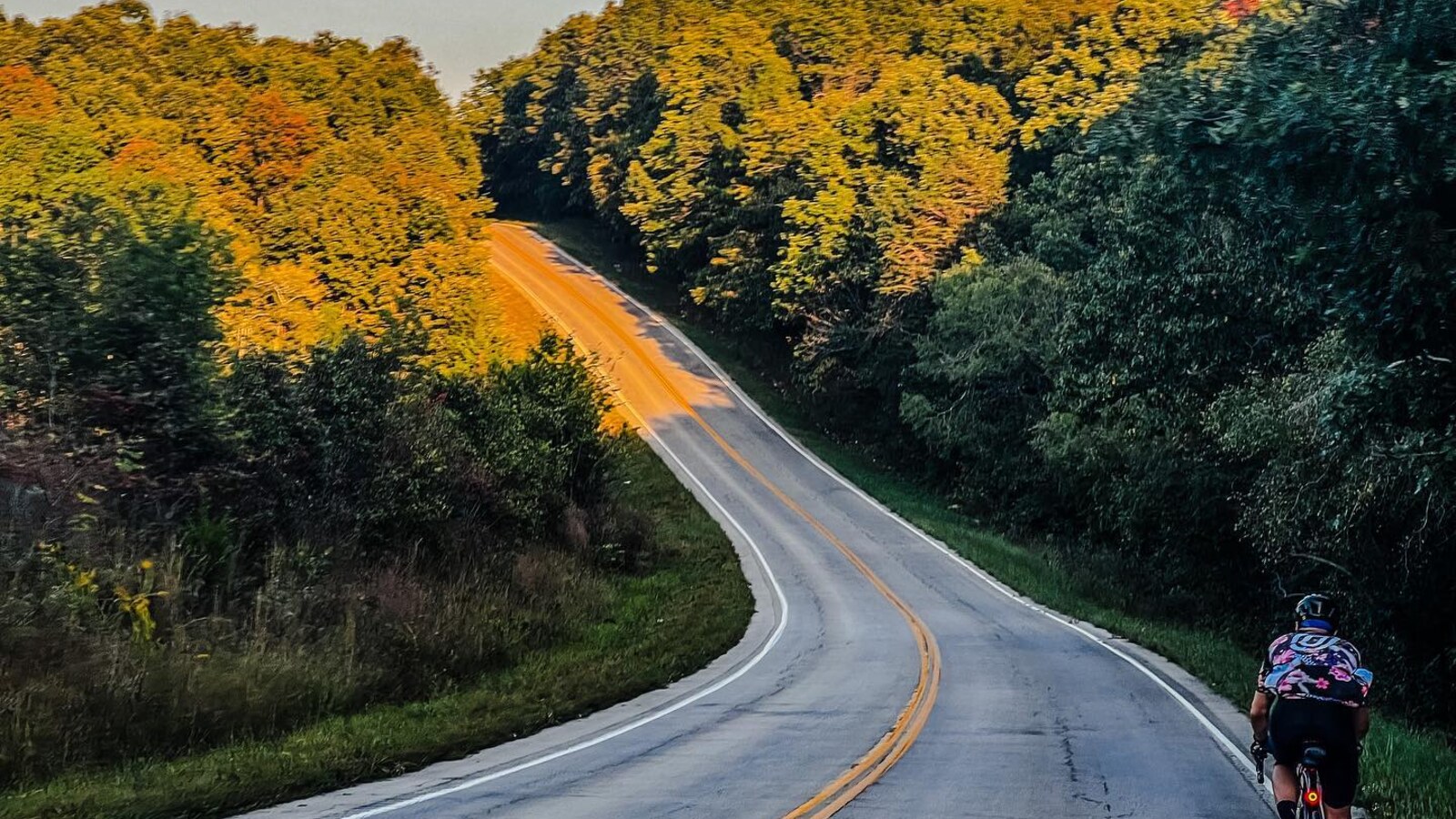
The road kept folding through trees and small hills. It was beautiful. It was also the kind of terrain where the next climb hides until you are already at the bottom of it. The long open views of Texas and Oklahoma had been replaced by curves, shade, and short pieces of road that kept appearing one at a time.
At least the wind was less obvious.
We rode into the dark again. Night makes the routine smaller. You see the beam from the light, the edge of the road, the rider in front of you, and not much else. The day's big landscape disappears. The only useful question is whether the next few hundred feet are clear.
There is a lot of equipment involved in a cross-country ride, but the most important stuff is boring: lights that work, enough food, water, a route, and a bike that does not make a new noise. At night, the boring things become the whole trip.
Posting also starts to lose against sleeping. That is how two days become one Instagram update. Ride, eat, deal with the bikes, find where we are staying, get ready for tomorrow. Writing a thoughtful report from Arkansas falls pretty low on the list.
So Arkansas got one post.
It is actually a good record of how the trip feels now. The days are full, but the updates are getting shorter. A joke, an animal, a road, maybe a location. The photos hold the rest.
The picture from this section is one of my favorites. One rider low in the frame. A two-lane road rolling away through the trees. No landmark. No finish line. Just another stretch that has to be ridden.
That is most of a trip like this. The state lines and big signs are useful markers, but the real distance is made out of anonymous roads between them.
California, Arizona, New Mexico, Texas, and Oklahoma were behind us. Arkansas moved us toward the Mississippi. Missouri was next, and fewer than 1,000 miles was finally getting close enough to think about.
For the record: Arkansas was lovely.
The dogs were extremely motivated.