Only about 2,913 miles to go.
That was the joke at the start in Santa Monica. We had ridden one day. The Pacific was behind us. Almost the entire country was still sitting there between the bikes and New York.
I have wanted to ride across the United States for a long time. It is one of those ideas that sounds great when it is still an idea. You draw a line across a map, buy too much equipment, make a spreadsheet, and tell people you are doing it. Eventually you have to show up at the ocean and start pedaling east.
So we did.
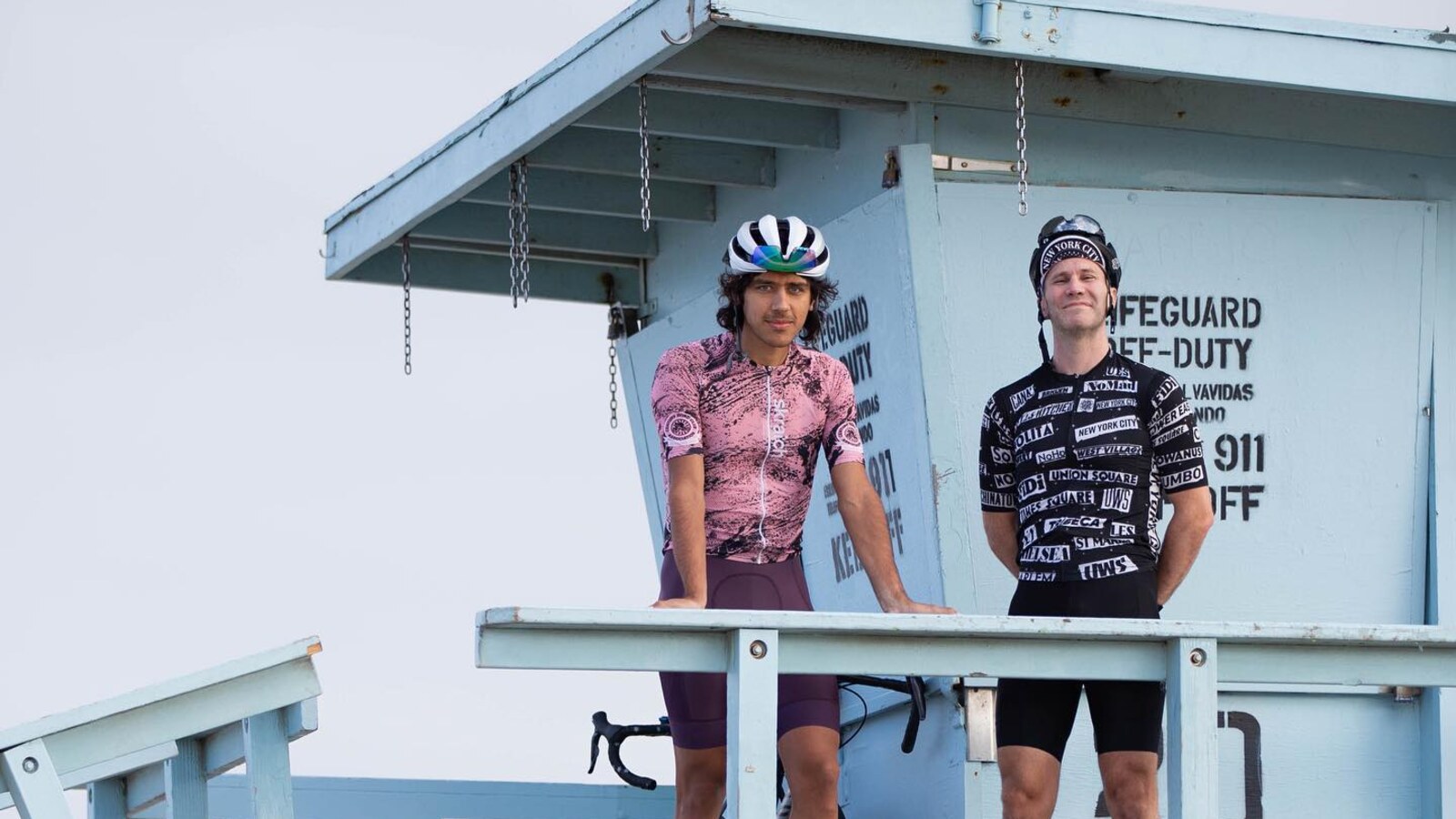
The photos from the morning are almost suspiciously clean. Fresh kits. Clean bikes. Blue lifeguard tower. Nobody is covered in road dirt or eating peanut butter out of a bag. We look like people who have absolutely no idea how many gas stations are about to become important to us.
There was a lot of planning behind that simple first ride. The workbook had the route, daily stops, places to sleep, equipment, food, support, and recovery. The packing list included bibs, two pairs of shoes, lights, cameras, spare chains, sunscreen, instant coffee, drink mix, bars, oatmeal, ramen, fruit, and a frankly serious commitment to peanut-butter-and-jelly sandwiches.
The plan is not complicated in theory. Ride east every day until we get back to New York.
The daily version is more annoying. Where are we sleeping? Is that road actually rideable? How much water do we need before the next stop? What is making that sound on the bike? Did the lights charge? Where is the food? Who has the spare part? Can we get all of this back into the car and do it again tomorrow?
The spreadsheet can answer some of those questions. It cannot answer the ones that have not happened yet.
That is part of why I wanted to do this. I spend a lot of my working life trying to make messy systems behave. Products, ecommerce, subscriptions, teams, budgets, data. You make a plan, reality shows up, and then you figure out what still works. A ride across the country is a much more physical version of the same thing.
The difference is that the feedback is immediate. If the route is bad, you are standing on the bad road. If the food plan is wrong, you are hungry. If something on the bike breaks, there is no slide deck that makes it unbroken.
This is also not a solo trip. There are other riders, a support car, and people helping keep the whole thing moving. One person can pedal a bike. Moving a small traveling circus across the country every day takes a group.
I wanted to post along the way because a month like this will turn into one large blurry memory if I let it. The little updates may be short. Some days the whole story might be a road, a sandwich, a flat, or a bad joke. That is probably more honest than trying to make every day profound.
Day 1 was simple.
We started at the Pacific. We rode through Santa Monica under the palms. We finished the first piece of the route. The bikes worked. The group was together. New York was still absurdly far away.
2,913 miles, give or take.
Time to go east.