My brother shared a folder called Fischer family photos.
Inside was a PDF called Houses Dad built. It was 68 pages of scanned photographs with no captions and almost no people. Mostly it was one building after another.
There were finished houses in deep snow, brick entries still surrounded by construction debris, apartment buildings, bare frames, garages, and the same dark wood houses photographed from several angles. A few pictures were sideways. Several were taken through a car window. Nobody had cleaned them up for a portfolio.
They were just the record.
That made them better.
My first impulse was still to organize them. I wanted dates, addresses, project names, and a map. I wanted to know whether the photos were in order and which buildings belonged together. That is what I do when somebody hands me a pile of material. I try to make the system visible.
The PDF did not cooperate. It was a family scan, not a database. The mess was part of it.
The pictures were not trying to explain Dad or turn the work into a clean career summary. They showed what he had been looking at: the framing, the roofline, the front entry, the parking area, the building sitting in the weather. Then the next building. Then another one.
Sixty-eight pages is a lot of physical evidence.
The folder arrived while a lot was happening with my family. Nine days later, I wrote a short work email saying I had a tough schedule because of my father's recent passing. That was as much as I could fit into the note.
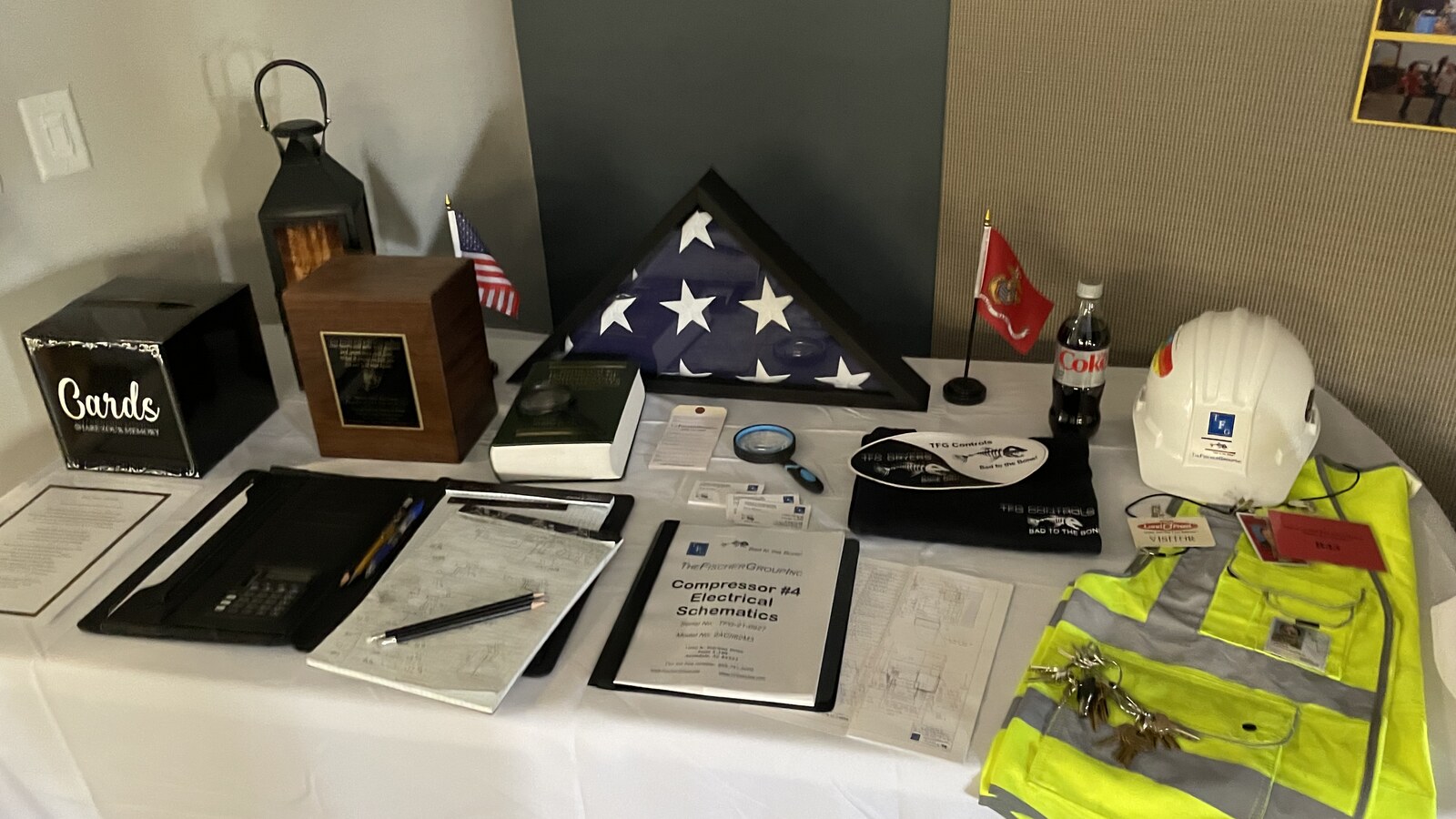
I flew back to Phoenix for Dad's celebration of life. One table held a folded flag, a Marine Corps flag, his hard hat, a high-visibility vest, a set of electrical schematics from The Fischer Group, pencils, notebooks, and keys. It looked like somebody had emptied several decades of work onto one white tablecloth.
No single thing on the table was especially complicated. Together they were very specific. The flag. The hard hat. The rolled plans. The cheap pencils. The keys to places that still needed opening.
The house photos made sense beside it.
I had spent years bringing an old Poughkeepsie Victorian back into shape. I had also owned lofts, chased buildings, opened walls, dealt with permits, and found new construction problems behind old construction problems. I knew I liked making physical places work. Looking through Dad's photos made that part of me feel less random.
My work had gone deep into technology, products, and startups. His work left buildings behind. Mine usually left software and systems that kept changing after I moved on.
The Poughkeepsie house had pulled me back toward the physical version. Five years of repairs made it impossible to pretend a plan was finished because the spreadsheet said so. The wall was still open. The pipe still leaked. The room either worked or it did not.
Dad would have understood that part.
I did not suddenly understand everything about him. I was just glad my brother scanned the pictures.
Grief makes ordinary records feel urgent. A folder that could have sat unopened for years suddenly looked like something I needed to keep in three places. Not because every building mattered equally. Because this was the set we had.
Folders like this usually arrive too late to ask the obvious questions. Which house was hardest? Which one went wrong? Why did he photograph that garage three times? Was the dark wood building a favorite, or was it simply the one he happened to have the camera for?
The PDF did not answer any of them.
Maybe another box has the answers. Maybe somebody in the family remembers. For now, the questions are attached to the pictures.
The houses were still standing somewhere. The photos were together. Dad's hard hat and drawings were on the table.
There were 68 pages. I kept going back through them.