“I need access to GitHub and our code repositories.”
That was the whole point of the ticket. I also asked for permission to create my own repositories, thanked the support team, and sent it.
I was Wahoo's Chief Commercial Officer. I was not joining the engineering team or pretending to be a full-time developer. The request was much smaller. I wanted to open things myself.
Some questions started with a customer or a commercial problem and ended up in the software. I did not want to wait for somebody to send me a screenshot when I could look at the repository.
I had spent too much of my career around infrastructure, data, and software to become somebody who only looked at the output. I did not need to own every pull request. I did want to understand how the product was actually put together.
At Wahoo, one customer experience could cross hardware, firmware, apps, subscriptions, ecommerce, support, and the systems connecting all of them. A commercial question could become a software question in two minutes. A product decision could show up later in conversion, retention, or a support queue.
“Send me a screenshot” only gets you so far.
The ticket moved fast. Support logged it, checked the approval, and sent the invitation 57 minutes later. Less than half an hour after that, my Wahoo email address was attached to my existing thechrisfischer GitHub account.
I did not need a new identity or a fresh account. I needed the Wahoo organization attached to the account I already used.
That detail made me happy. The same GitHub account had followed me through side projects, companies, and a lot of code that should probably stay in private repositories forever. Wahoo was another organization attached to the same working history.
The ticket does not say which repository I wanted first. It only records the door opening.
That was enough. I could find the relevant code when a conversation reached it, and I could make a small repository if I needed to test something without turning the request into another handoff.
Access did not turn me into an engineer at Wahoo. It removed a dumb boundary. If somebody mentioned a service, integration, or piece of product logic, I could look for the repository and understand what they were talking about. If I needed help, I could ask about the actual thing instead of describing a screenshot somebody else had sent.
The permission to create repositories mattered too. A small test did not need to begin as a formal project. I could put code somewhere private, give the right people access, and decide later whether it deserved to live.
That was already how I worked outside Wahoo. I had my own account, old projects, current experiments, and plenty of abandoned things. The company invitation let that working habit cross into the job without making a new account I would forget existed.
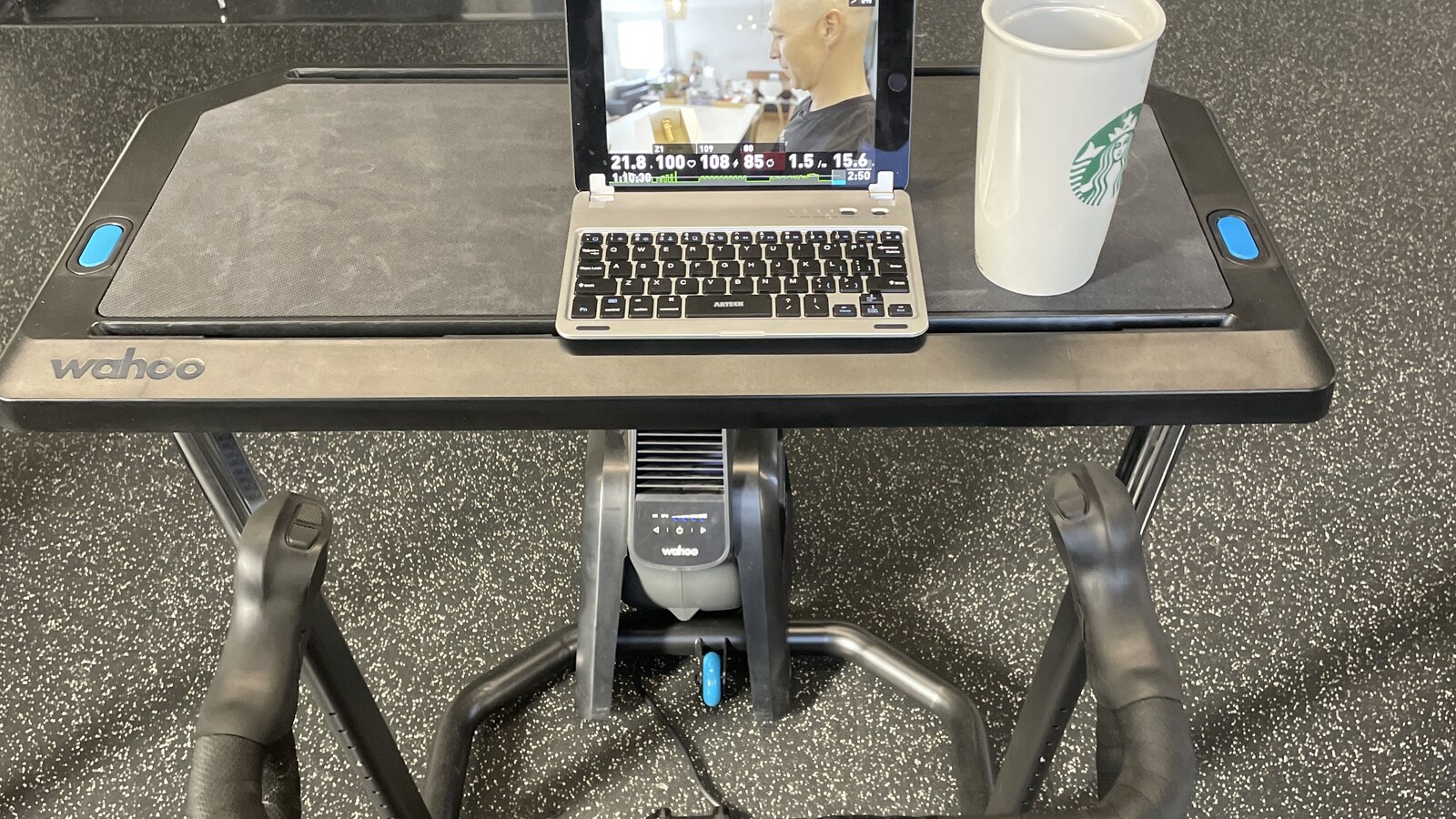
My camera roll from the same afternoon in Atlanta has a pretty accurate picture of the setup. A tiny laptop was sitting on a Wahoo KICKR Desk with a cup of coffee beside it. A bike and trainer were underneath. The laptop screen had a video of me on it, because apparently one version of me at the desk was not enough.
It was not a developer workstation. It was barely a workstation.
It worked.
The picture made the job look stranger than the ticket did. Chief Commercial Officer on the email signature. GitHub invitation on the laptop. Wahoo desk under the coffee. Bike trainer below everything.
That mix was normal. The commercial work was never separate from the product people bought, the software they used, or the hardware sitting in the room. Sometimes the useful move was a strategy meeting. Sometimes it was opening the repository.
The GitHub invite landed, the new address was verified, and the support ticket closed.
One line sent at 2:40. One less locked door before 4:10.
Back to work.