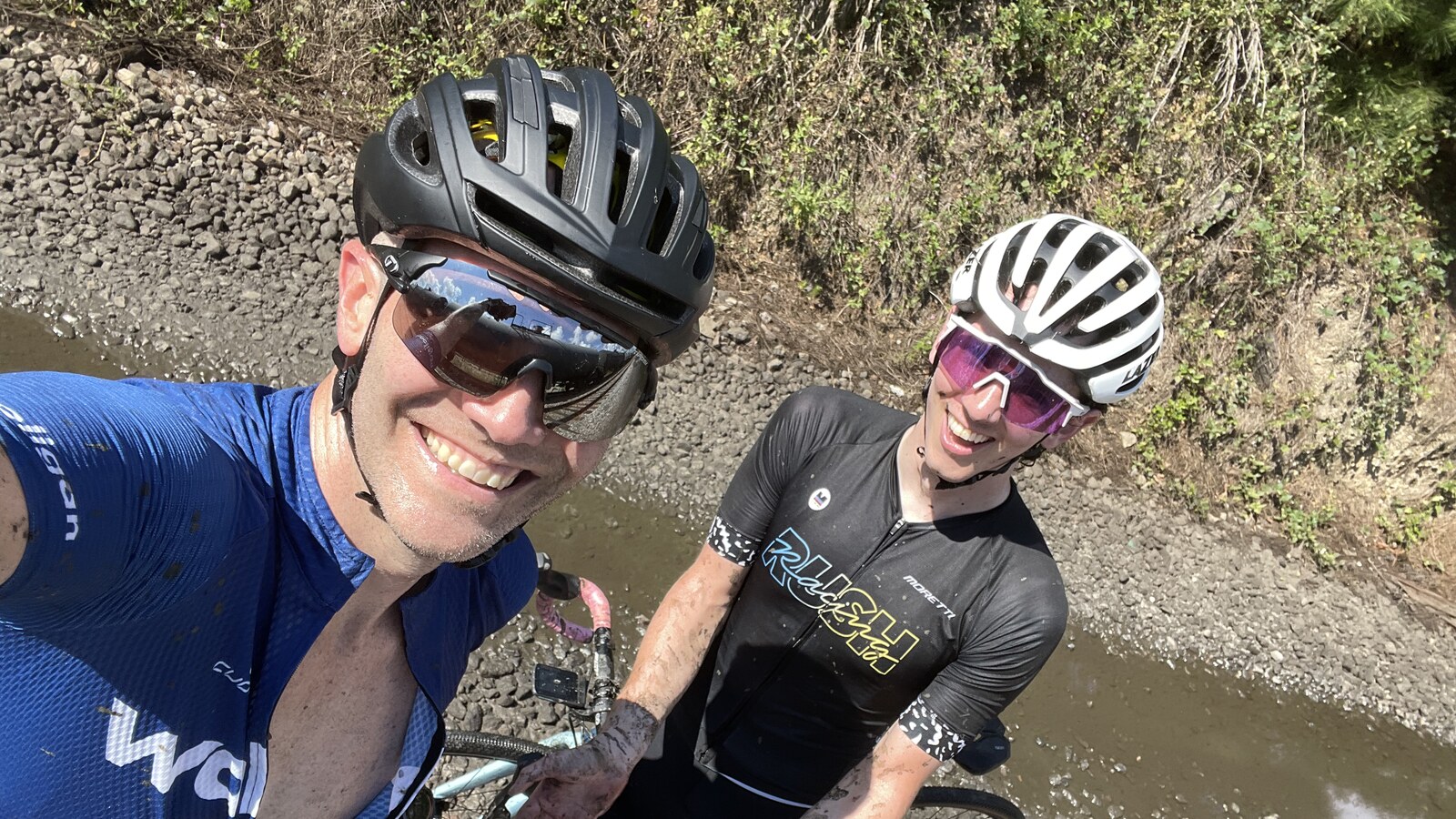
“Clearly tough to explain lol. Lewis and Clark adventure.”
That was my attempt to describe the route after we were safely off it.
The ride started like a normal Saturday outside New York. Two bikes, good weather, and enough time to follow whatever looked interesting. The camera roll opens with a broad view across the water. Not long after that, both of us are standing in the sun covered in mud.
The route had stopped behaving like a route.
At some point there were train tracks. At another point we rode through what I later called “lush Lilly pad forests.” The spelling in the message was bad. The description was pretty accurate. There was standing water, loose rock, and the kind of surface that makes a road bike look deeply offended.
The photos became an inventory of what happened. Mud on jerseys and arms. A close look at a handlebar. A wheel and drivetrain that needed attention. Two riders smiling anyway.
A friend sent a message after the ride: “Tons of fun man thanks for the ride. Hopefully didn't hold ya up too much.”
I wrote back that it was all good, the ride was a blast, and we should do it again soon.
While we were in it, the questions were smaller. Which path? Can the bikes get through? Is that actually the trail? Back home with the mud drying, the answer was simple: the ride had been a blast.
Two days later I added the ride to our shared Strava activity. The clean line on the map made the afternoon look much more deliberate than it had felt from the saddle.
My full explanation still ended with the only reliable record of where we had been:
“But strava knows ;)”