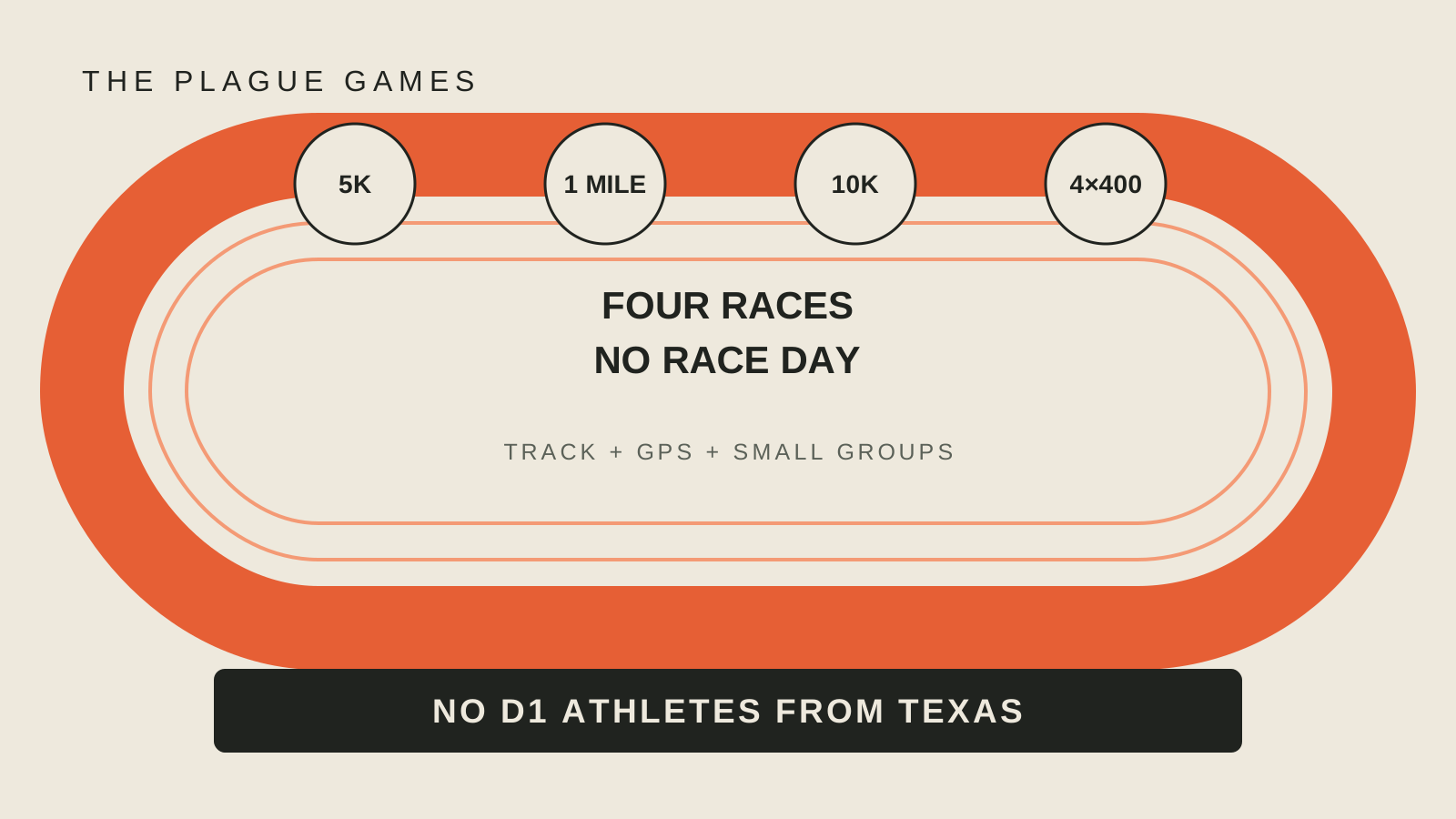
We had four races and no race day.
A draft in my Drive called the idea the Summer Team Time Trial Series. The filename was better: The Plague Games.
The plan covered four months. August was a 5K. September was a mile. October was a 10K. November ended with a 4×400-meter relay. Instead of gathering everybody at one starting line, each race had a two-week window.
Runners could make as many attempts as they wanted. Every result had to come from an official measured track, include GPS data linked in race mode, and arrive by 4 p.m. on the final Sunday.
Teams had five to eight runners. The fastest five scored cross-country style, so low points won. The extra runners still mattered because they could finish ahead of another team's fifth scorer and push that team's score back. Everyone's time could change the result.
Then came the anti-stacking rule. A team could have no more than three runners who had broken 17:15 for 5K in the previous year. Friends from other New York City clubs were welcome. Recruiting D1 athletes from Texas was not.
The draft also tried to make mixed-gender teams competitive through event-specific time adjustments. Monthly winners would get pizza and a six-pack. A season prize was still a question mark.
Safety rules were less playful. No more than three people could run together. Masks were required unless runners had enough space. The draft told people to use their judgment, avoid openly ignoring the rules, and not behave like a “covidiot.”
That fit the club's reality. At a board meeting the week before, we expected July permits to disappear, planned to continue a virtual 5K series, and remained skeptical about restarting group runs.
The rules were still a draft. The title was already right.