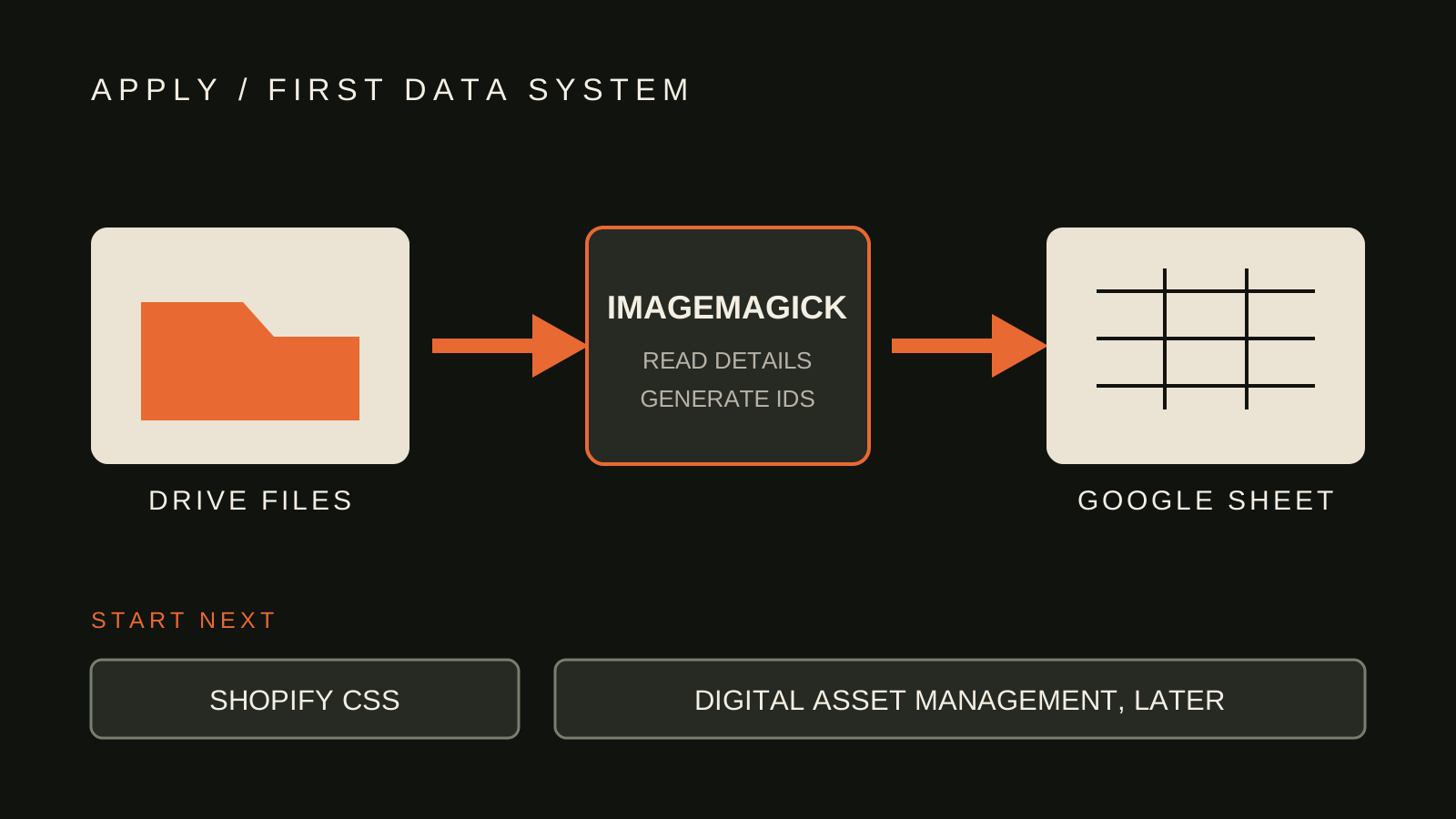
Apply's first database was going to be a Google Sheet.
I sent a developer a small first-project brief. A script would open files in Google Drive, inspect them with ImageMagick, pull out useful details, and write the results into a spreadsheet. It would also add generated information such as an image ID and an Apply ID.
That spreadsheet would become our first database and reporting system while we started beta testing.
The files were already the business. Drive was filling with Photoshop documents, transparent PNGs, previews, backgrounds, holographic textures, design templates, artist folders, product copy, and Shopify exports. A sticker might begin as artwork, move through several production formats, get paired with copy, and finally appear in the store. A normal folder tree was not enough to show where everything stood.
The brief had two other pieces. There was front-end CSS work to do on the Shopify store. If the first projects moved quickly, we could begin the larger digital asset management platform. That would track each asset through its final workflow instead of leaving the status buried in folders and filenames.
We were also fundraising and preparing to launch. Those were the large, exciting parts of the company story. The work available to start immediately was less dramatic: inspect files, generate IDs, write rows, fix the store.
I told the developer we had plenty to begin the next day. We could work together in overlapping time blocks for the first week or two, get the small system running, and then decide how much more made sense.
The larger asset platform could come next. For the beta, the database was a spreadsheet.