“I have only managed 100.”
That was a real sentence I sent to a recruiter.
The search had changed. The company now wanted somebody who had managed between 200 and 500 engineers. I had managed an organization of about 100, so I said I was probably not the right fit. I was still happy to catch up in a couple of weeks.
The word only was doing a lot of work.
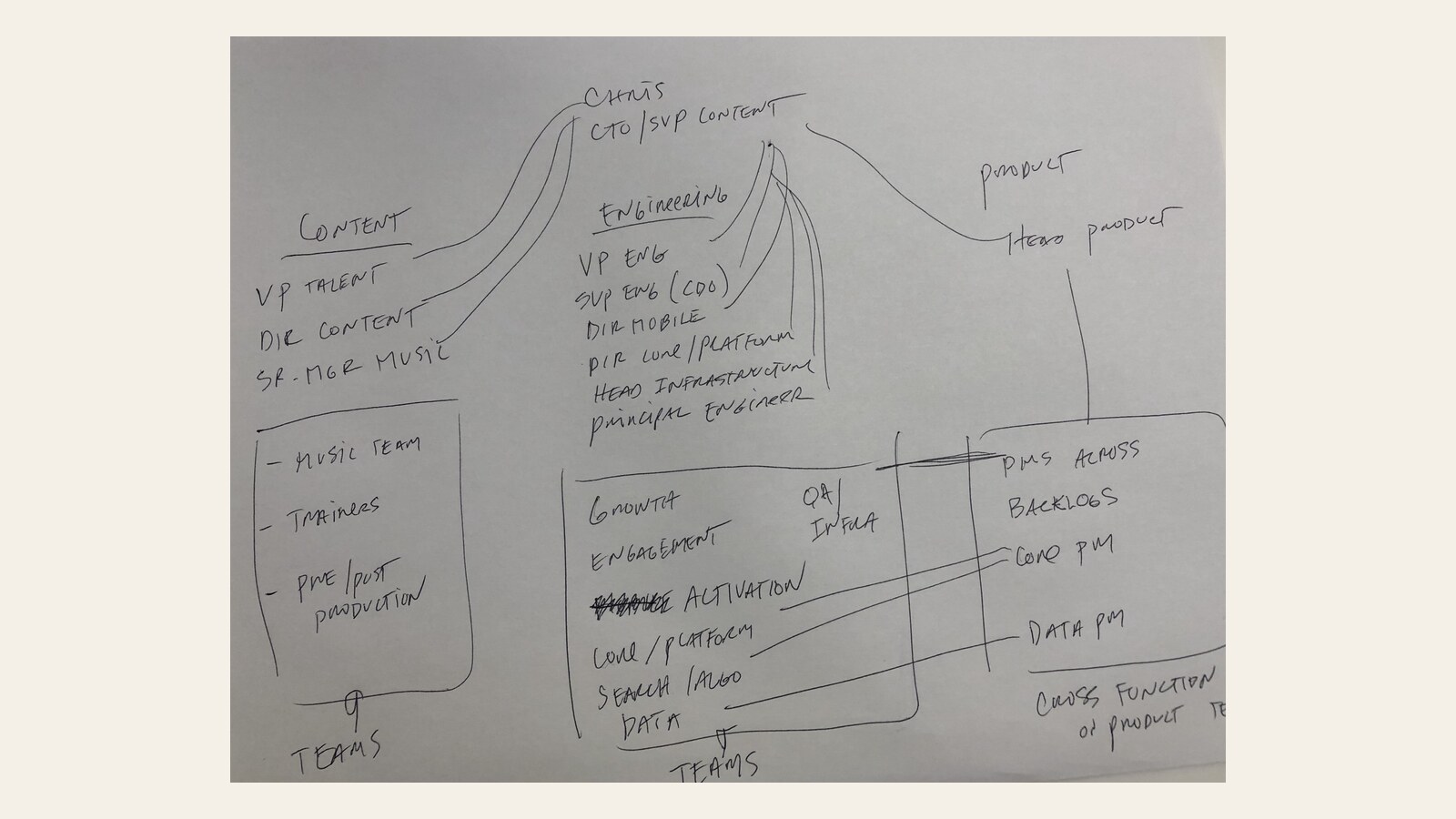
At Aaptiv, the organization was hard to explain verbally. Content, engineering, and product did not fit into a clean stack of boxes. I was responsible for engineering and content. Product sat beside both. There were directors, senior leaders, principal engineers, product managers, and teams cutting across the formal structure.
The next day, after a different interview, I sent the interviewer a photograph of a sketch I had made. It showed my direct reports, the general teams they managed, and the messy lines between engineering and product. I thought it would make a conversation that had felt difficult more concrete.
The drawing was rough because the organization was real. Decisions happened through quarterly planning, but not only there. Engineering and product leads met twice a week for a standup that I described as a scrum of scrums. We shifted priorities in those meetings when the business needed us to.
None of that made me the right person for a 500-person engineering organization. It did make the number 100 feel strange. On my sketch it meant direct reports, teams, and working lines that crossed the formal org chart. In one recruiting requirement, it became the small end of the ruler.
One hundred felt huge until somebody put 200 to 500 on a page. Then it became only.