Good news: running was fun again.
Bad news: I could only do it at 60 percent of my body weight.
The Alter-G treadmill put my lower body inside an air chamber and reduced how much weight landed on the injured foot. It was my first proper run since the New York City Half three weeks earlier.
I lasted 30 minutes.
At 60 percent, the foot felt good. At 70 percent, I noticed a very slight ping around the heel and big-toe area. I backed it down rather than trying to prove something to a treadmill.
That counted as progress.
The first outdoor test had gone badly. I ran 2.5 miles after more than a week off, and the foot started hurting again after the workout. Walking was fine. Riding was fine. Running was still too much.
So I rode the bike and scheduled more time in the Alter-G.
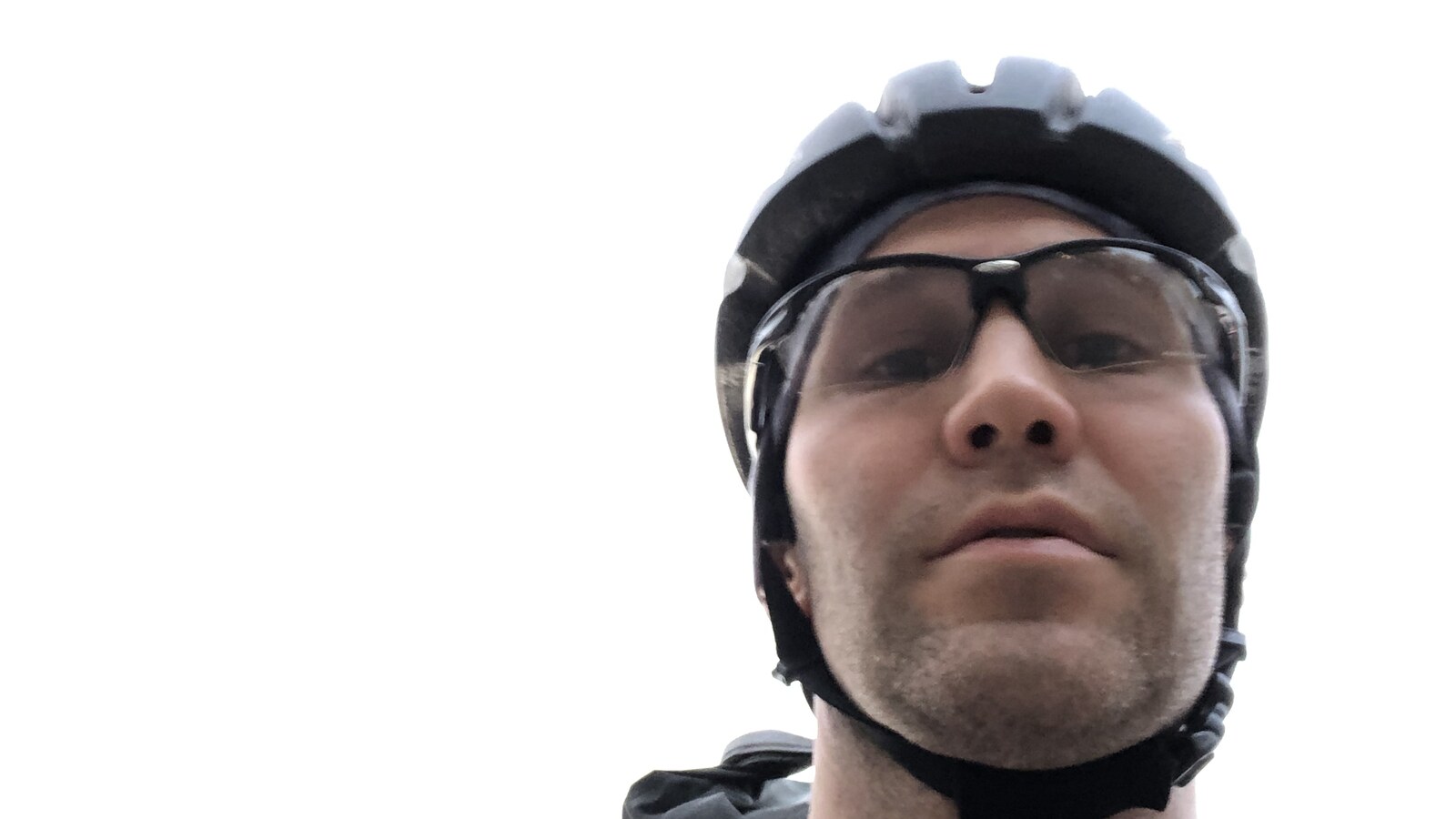
An owned photo from the same day has me in a helmet, looking up at the phone during a ride. It is not a dramatic injury picture. That was the actual routine: cycle because it worked, test the run in a controlled room, send the physical therapist a detailed report.
The second Alter-G session went better. I ran 45 minutes at 75 percent. Two days later I tried to move from 70 to 75, then 80 and briefly 85. A few tiny pings came back, so I cut the run short.
Again: progress, not done.
I had already moved from barely walking to cycling normally and running under partial weight. The mistake would have been turning one good session into permission to jump straight back into normal mileage.
I was not always great at avoiding that mistake. This time the treadmill had percentages printed on it.
Sixty percent was enough for the day.