The first half took 1:28:14. The second half took 1:28:17.
That is about as even as I know how to run a marathon.
Chicago was wet and humid. I crossed the line in 2:56:31, an average of 6:44 per mile. My slowest five-kilometer split was the first one. After that, every 5K stayed between 20:31 and 21:15.
There was no big collapse. There was no late miracle either. I got to halfway, kept moving at almost exactly the same speed, and finished three seconds slower than I had started.
I was proud of that time.
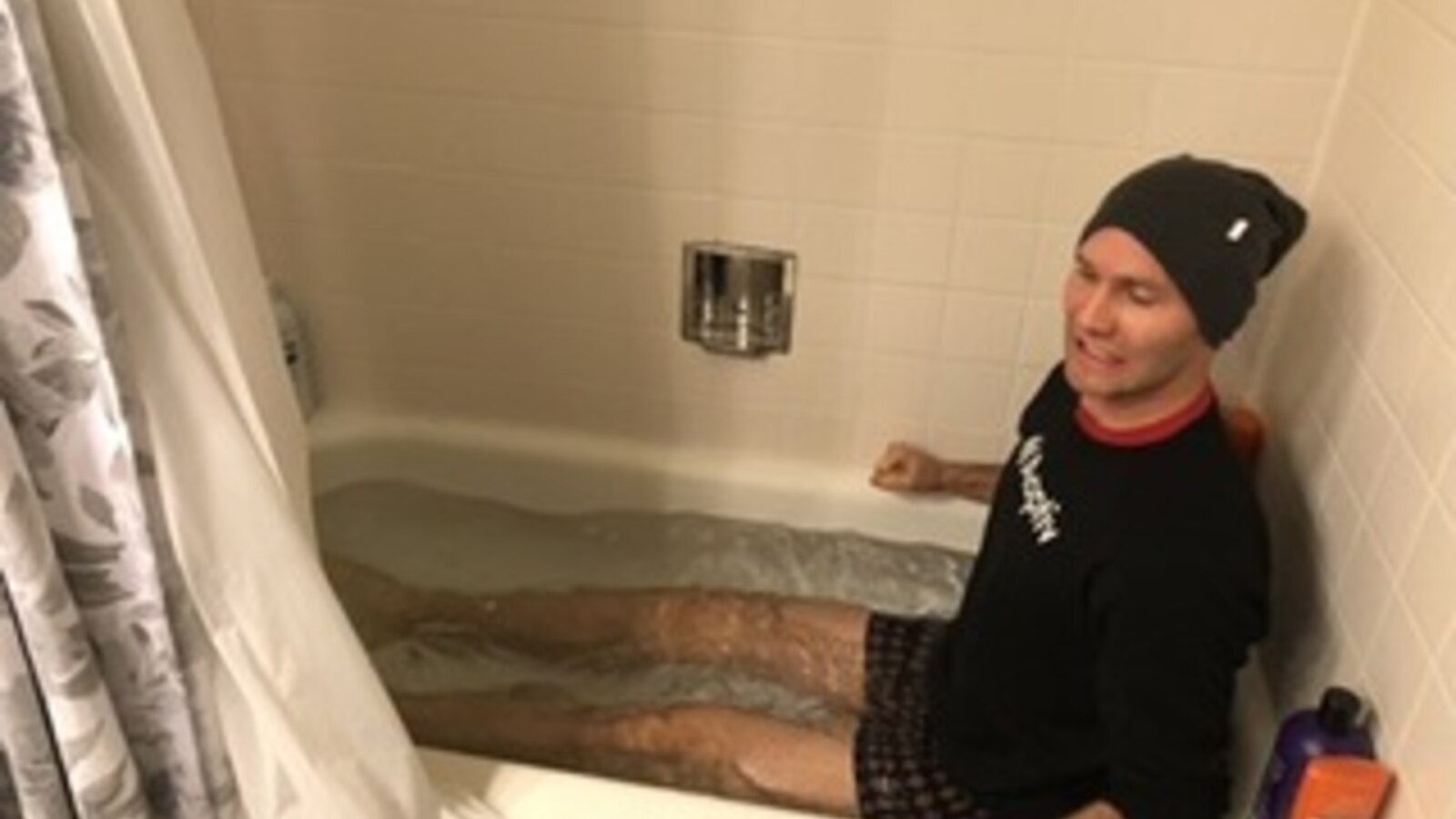
The photos afterward are less polished. I am sitting in a hotel bathtub wearing a knit hat, a long-sleeve shirt, running shorts and a watch. My legs are in brownish ice water. There is a bottle of orange body wash on the edge of the tub. This was the recovery setup.
Training had not been completely clean. My Achilles and arch had taken a beating during the block. A few days after the race, I was already trying to sort out rehab and the next six to eight weeks.
The strange part was that the New York City Marathon was still coming. I had another marathon in a few weeks and wanted to run 2:59:59. One second under three hours. That was the number.
I also wanted to get comfortable on the bike again. The rough plan was easy spinning and lower-intensity riding through New York, then harder training in early December. The longer target was the duathlon world championships the next May.
This is fairly normal for me. I could enjoy Chicago and still have three other things queued up before my legs had stopped hurting.
But Chicago deserved a minute. I had trained through the summer, gone out at the right pace and held it for the full distance. The result page said 2:56:31. The email I sent after said it more simply: “I’m really excited by that last effort still, proud of that time :).”
Then I got back in the ice bath.