“Race = not good.”
That was the subject line.
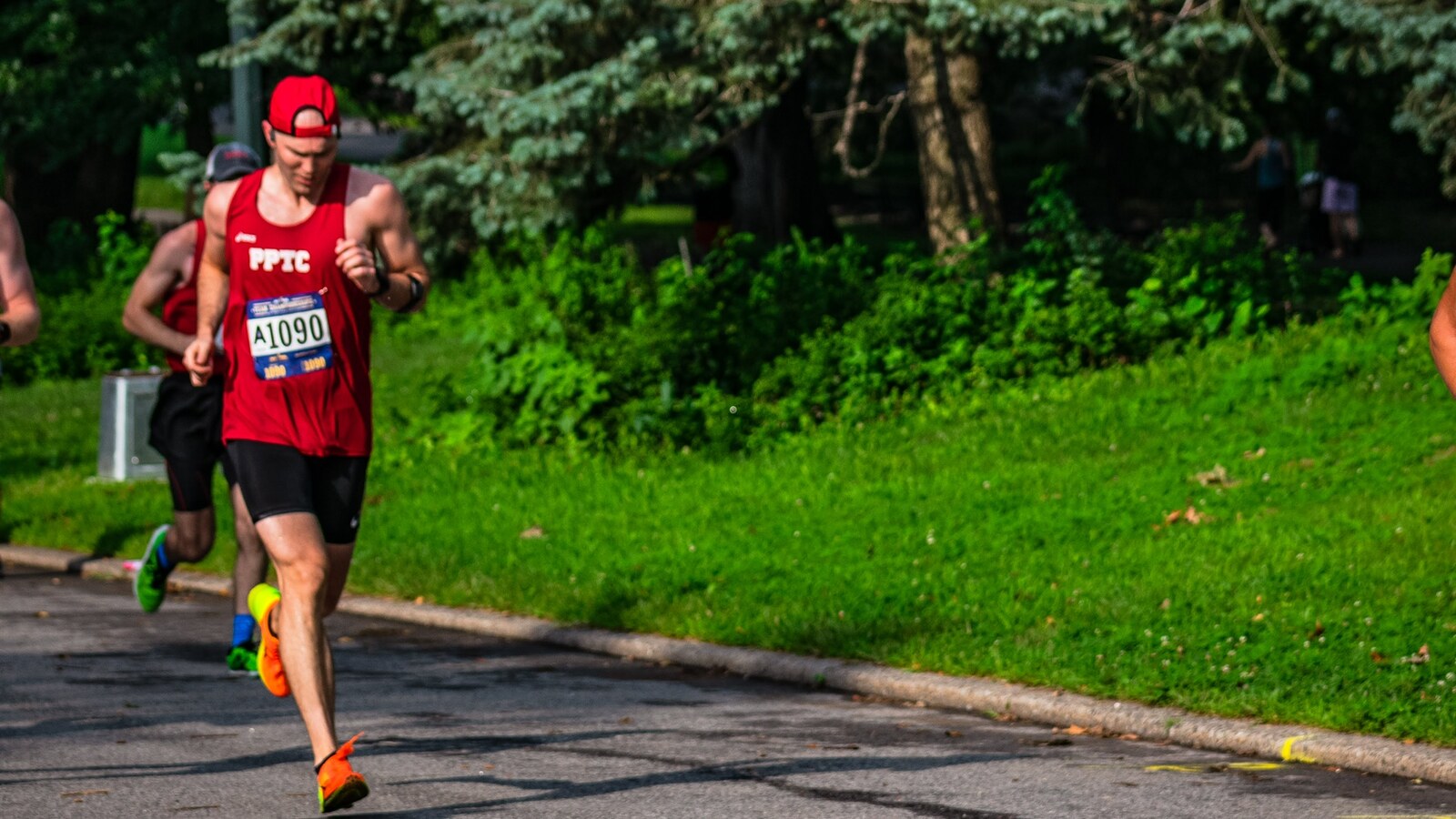
The NYRR Team Championships were five miles in Central Park. It was 72 degrees with 97 percent humidity. I had run a controlled 18:43 5K three nights earlier and felt good enough to ask if I should try to hold 5:50 pace for the five-miler.
Instead I ran 31:45 and blew up.
I could not get my heart rate down. It sat north of 175 for most of the race, which was sky high for me. My pace fell apart in miles three and four and never really recovered.
The only reason I hung in was that Team Champs scored ten runners deep. Prospect Park Track Club needed my time even if it was about two minutes slower than what the team expected from me.
I finished as our eighth scorer.
The men's team won the B division by 54 seconds.
That should have made the whole thing simple. It did not. I was thrilled for the team and embarrassed by my own race at exactly the same time.
My first theory was the humidity. The better answer was that I had screwed up the pacing.
I had rushed the warmup and finished it too early. Then I opened around 5:45 pace. A few minutes later I threw in a stretch around 5:08. There was no recovering from what I had done in the first ten minutes.
The irritating part was that I had run three 5:45 miles in a row at a much lower heart rate two weeks earlier. I wanted a clean physiological explanation for why one pace worked then and detonated me now.
I sent a long note to my coaches and eventually added the part I had left out.
Work had gone to complete shit.
Aaptiv's advertising plan was not working the way we needed it to. The immediate product work was trying to make new magic in the payment screens across the app and website, basically building and testing until the conversion changed. I had a lot of my career tied to Aaptiv and very much wanted the company to work.
At the same time, a close friend had suddenly become critically ill. Doctors were still trying to understand why. People close to him had come into town because nobody knew what would happen next.
I did not believe either of those things could make me run slowly.
“That sounds like a ghost story to me,” I wrote. Tough days were tough days. A race was a race. I grew up believing that you worked harder and got better. You did not complain or talk much about feelings.
I also felt guilty asking about a five-mile race while a friend was in the hospital and the business was in trouble. Who cared? It felt ridiculous. But I was trying to understand how training worked when normal life was not cooperating.
The answer was not that work stress had caused an exact number of lost seconds. There was no useful way to calculate that. The warmup and pacing were plainly bad. The rest of the week still came into the race with me.
That was the part I had trouble accepting.
By the end of the email chain, I was more curious than disappointed. The macro picture still looked good. I liked the structure of the training. I felt stronger. The bike work was especially exciting because I had never trained on the bike with any real structure before. My climbing was crisper, my endurance was better, and I was learning how to turn the bike from a leisure activity into a sport.
The following week I was tired and sore. Work still sucked. I cut one workout's resistance by four percent, bought myself a pair of new Nike shoes as a treat, and tried to cut myself some slack.
The best news came Thursday night. My friend had pulled through and should be out of the hospital soon.
The race result stayed 31:45. I still hated how it felt. I was also very glad I did not quit when it went bad.
The team needed ten scorers. I had a terrible race. We won.