I had a perfectly reasonable question: could I run both races?
The Cocoa Classic had a 5K and a 10K. I was already registered for the 5K, but fifteen kilometers sounded better than five. The events were scheduled separately, so technically there was enough time to finish one, change whatever needed changing, and line up again.
I emailed NYCRUNS.
“Howdy. I plan to run both the 5k and 10k. I'm registered for the 5k. Do I buy two bibs? How can I achieve this? Thanks!!”
The answer was yes. Two registrations. Two bibs. Run the 5K, then run the 10K.
Perfect. I registered for the second race.
This was not coming from nowhere. A few days earlier, the final results arrived from the Cocoa Classic in Riverside Park. I had run 19:29, finished second in my age group, and placed eighth overall. It was another sub-twenty-minute 5K in a year when I had been working my way back from a stress fracture.
The speed was returning, and I was feeling ambitious enough to turn a normal race morning into a double.
Winter had a different plan.
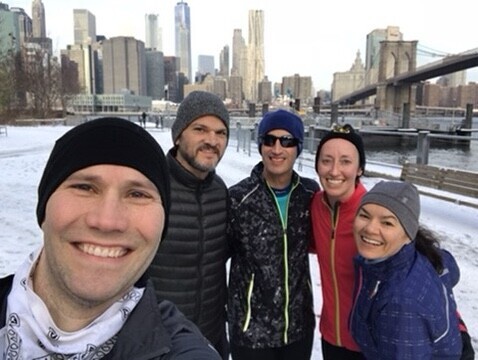
Snow and slush covered the course. The organized races became an untimed fun run, which removed most of the reason for buying two entries. I had paid twice to race twice. Now there was no 5K result, no 10K result, and no particularly meaningful reason to wear two bibs through the same mess.
I asked if one of the registrations could be refunded.
The exchange became its own small race. The weather policy produced a credit for a future NYCRUNS event. I had already registered for the event they suggested. I asked if the credit could be applied there anyway. The eventual answer was that it would carry forward to the next year's Cocoa Classic.
Fine. Future Chris had a race entry.
The larger running commitment had already arrived in my inbox.
Prospect Park Track Club was putting together its first ultramarathon training group. The target was the Rock the Ridge 50 Miler in May. I had a confirmed spot in the group and an invitation to activate TrainingPeaks, sign the waiver, and start getting ready for the program.
Fifty miles was far enough outside my normal race distance to be exciting. It was also far enough to make the training structure matter.
I had spent much of the year mixing running with a lot of cycling. The bike was transportation, training, and the best way to keep moving without adding another day of impact. I ran to the Aaptiv office sometimes. I biked there more often. Both fit naturally into the week.
The ultra plan would add much more running. That was the point, but I did not want to throw away everything that was already working.
I asked the coach how the plan would account for the riding already on my schedule. More specifically, I wanted to know how to substitute a bike ride when my legs felt rough and needed less impact. I was enthusiastic. I was also trying not to repeat the injury cycle that had already taken a piece of the year.
The reply was basically a friendly warning: there was going to be a lot of running. The plan could slide into TrainingPeaks around what I was doing, and we could adjust as it developed.
I signed the waiver and activated the account.
“Done and Done.”
The double-race plan got snowed out before it became anything worth bragging about. The larger plan was now sitting in TrainingPeaks, waiting for me. I had a bike commute, a pair of running shoes, and one useful question left: how much running was too much running?