“I'll need to start showing immediately.”
That was my answer when the tenant at 60 Broadway asked to leave the lease early. The request came just after Thanksgiving. Instead of waiting until February, she had found another place and wanted to move before Christmas.
I understood. I also had a loft that was about to be empty in the middle of winter.
The Gretsch was one of the stranger side projects running alongside the actual job. I had bought the Williamsburg loft years earlier, lived there, renovated pieces of it, and eventually became the person answering emails about leases, keys, repairs, and whatever the building was doing to itself that month.
This month it was the exterior.
Construction had reached our side of the building. A floor-to-ceiling wall of plastic separated the windows from the work outside. There was dust, noise, and no schedule I trusted enough to repeat as a promise. The loft was still the loft, but the view had temporarily become a construction enclosure.
That made the listing awkward. It also made being direct more important.
A close friend helped me set up a separate Gretsch Manager email address and turn the apartment back into a listing. I was swamped at Aaptiv, so splitting the work was the only way it was going to happen quickly. We needed clean photographs, an accurate description, a place to send questions, and an organized way to handle showings while the current tenant still lived there.
The StreetEasy listing went live. The response was immediate and slightly ridiculous.
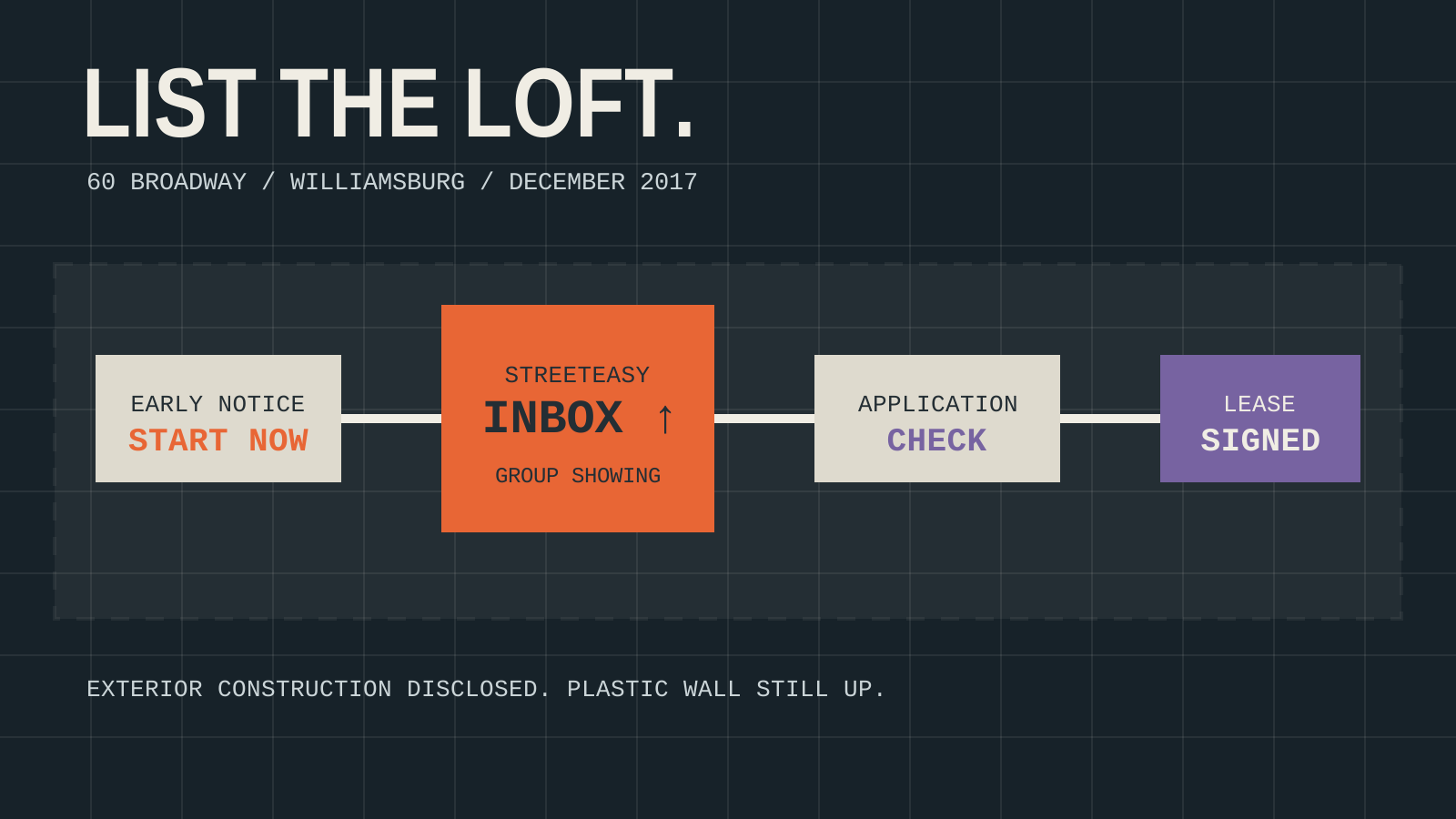
Within hours, the inbox was full of people asking about the loft. The problem shifted from finding interest to controlling it. We did not want a parade of strangers walking through an occupied apartment all week, so we started pushing everybody toward a single Saturday showing window.
Every inquiry needed the same information. Yes, the unit was available. Yes, we could arrange a showing. Also, there was exterior construction directly outside the windows, it was visible, and nobody could say exactly when that portion would be complete.
I did not want somebody discovering the plastic wall after rearranging a Saturday to see the apartment. I definitely did not want somebody discovering it after signing a lease.
The open-house plan became its own little operating system. Confirm the time. Group the visits. Coordinate with the tenant. Keep the building informed. Answer the same questions without making every answer sound automated. Make sure the people who remained interested understood the construction before we treated them as serious applicants.
The listing had been live for only a few days when an application arrived. That created a different stack of work: documents, references, a credit check, a decision, a lease, and a waiver that explicitly covered the exterior project.
This was not the fun version of real estate. There was no dramatic renovation reveal and no clever deal. It was a deadline, an occupied apartment, a temporary plastic wall, and a large number of emails that all had to produce one reliable tenant.
It moved fast because it had to.
We selected an applicant and started assembling the lease. The waiver needed to be clear. The dates needed to line up with the early departure. The signatures needed to land before the entire process drifted into the holidays.
By the end of the week, the final signed documents were together.
“I think that is it!” I wrote.
That sentence carried more relief than it looked like. A tenant had asked for flexibility, the listing had gone live immediately, the inbox had filled, the construction had been disclosed, an applicant had made it through the process, and the loft was not going to sit empty.
The plastic was still outside the windows. The side project had survived another month.