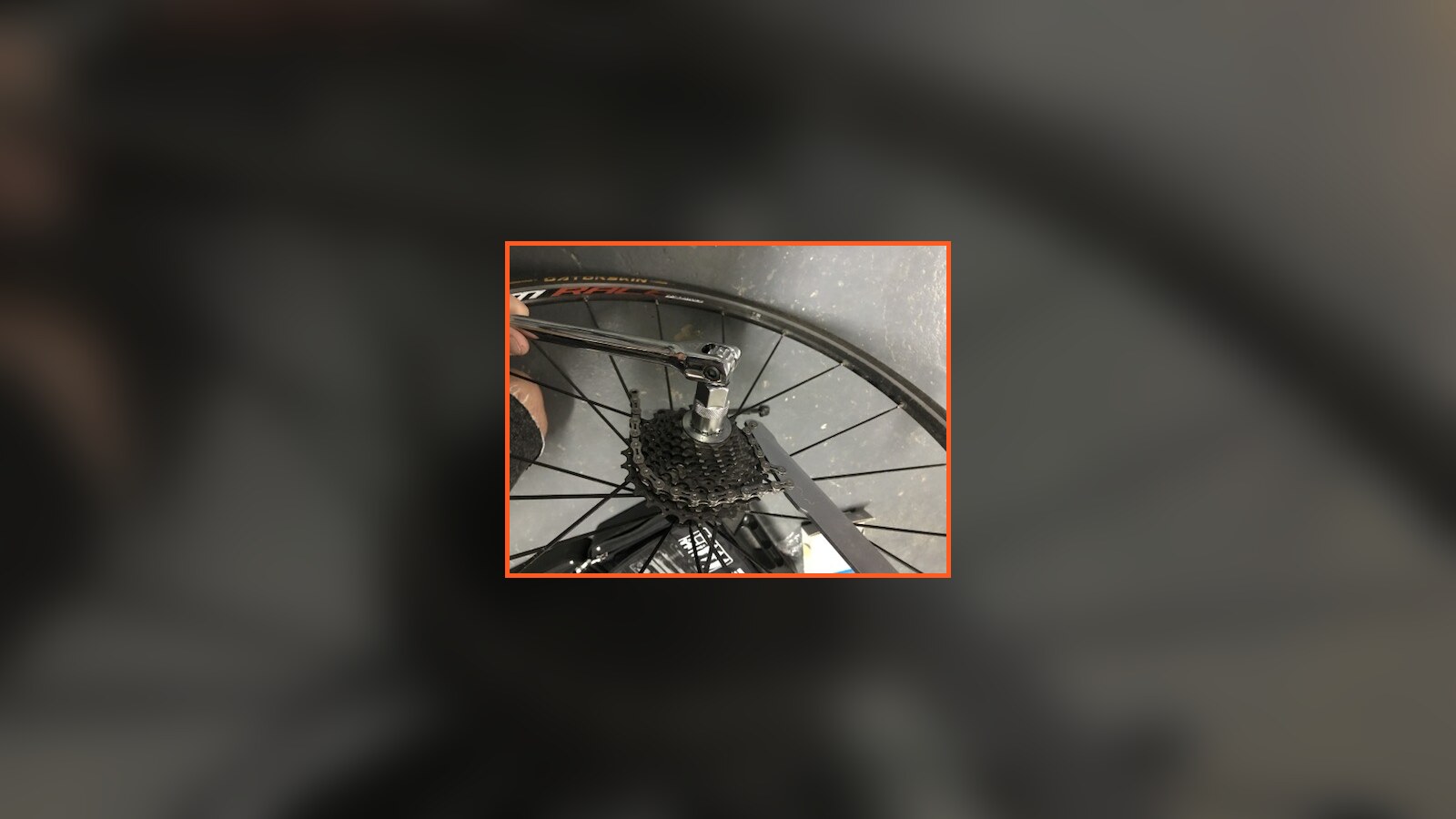
I wanted to know what was happening inside the bike.
I knew how to ride one. I knew how to train on one, race one, and spend too much time looking at the numbers it produced. When something mechanical stopped working, though, there was still a point where the bike became a collection of parts I did not fully understand.
That bothered me.
A few weeks earlier, I wrote Bicycle Habitat and asked when the next six-week maintenance intensive started in Prospect Heights. I did not want a ten-minute lesson on changing a tube. I wanted enough time at a workbench to take things apart, understand what each piece did, and have a chance of putting them back together correctly.
The rear wheel was a good place to start.
The wheel came off the bike. The cassette came off the wheel. The cogs and spacers sat in a line on the floor next to an open tool case. A component that normally looked like one solid object was suddenly a sequence with an order.
I took pictures as it came apart. They were partly a record and partly insurance against the moment when every loose piece on the floor started looking interchangeable.
That order mattered. Put a spacer in the wrong place, miss the way one cog lined up, or tighten the wrong thing badly and the mistake would follow the bike back onto the road.
This was the part I liked. The bike stopped being mysterious as soon as I could see the interfaces. One part connected to another part. Each tool had a specific job. If something did not fit, forcing it was usually a bad answer.
The electronic side of the bike was being less cooperative.
My Stages power meter needed a firmware update. The app connected to the device, showed the serial information, and then hung instead of completing the update. I opened a support ticket with a very plain subject: “FSA firmware update not working - hangs.”
Support wrote back a few hours later. The problem was a bug in the app that appeared when the power meter was several firmware versions behind. They had a workaround that would get the device through the update in smaller steps.
“Sweet! Will try this tonight thanks!” I replied.
There was something funny about taking apart a cassette in the morning and dealing with a firmware bug in the afternoon. Bikes had become both kinds of machine at once. The drivetrain could fail because a physical piece was worn, dirty, loose, or installed incorrectly. The power meter could be mechanically fine and still get stuck because software could not move cleanly from one version to another.
I was not about to become a professional bike mechanic. That was not the point. I wanted to be less helpless around equipment I used constantly, and I wanted the confidence to open something up before assuming it belonged in somebody else's hands.
By the end of the day, the cassette was no longer one mysterious lump and the firmware problem had an explanation. I still had to try the fix that night. At least I knew which tool to pick up next.