“I absolutely will... IF I can locate it.”
That was my answer when the finance team asked for an old option-exercise form. The housing project needed cash, and some of that cash might come from startup equity I had acquired years earlier. First I had to prove that the records matched what had actually happened.
Blue Sky had canceled the Rustic Meadows contract, but I was not done with low-income housing in the Midwest. I was trying to put together capital for a new venture I cared about.
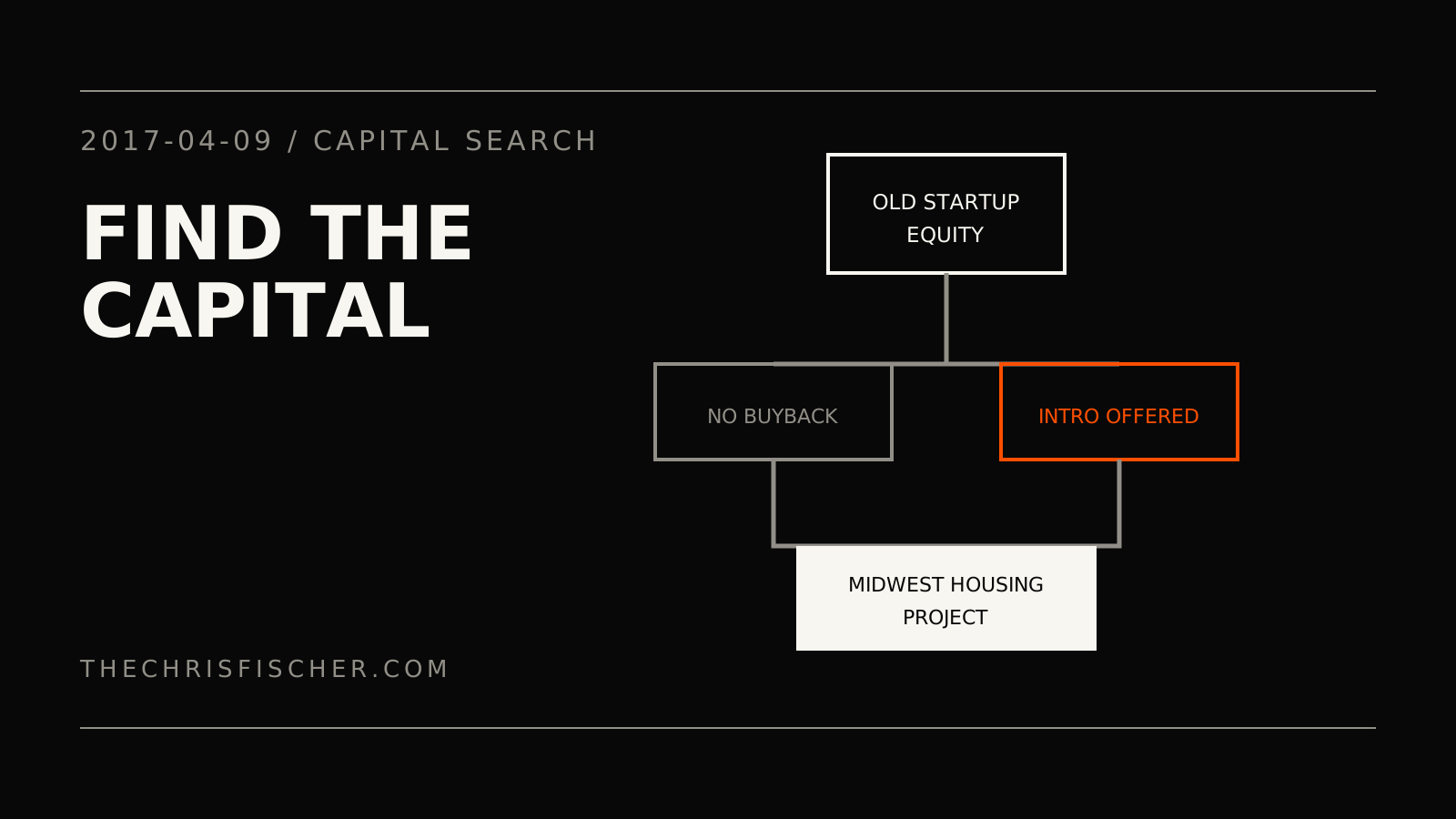
Some of that capital was tied up in old startup equity.
There was no button to sell it. I wrote people at two companies I had backed or worked with early and asked whether the companies, existing investors, or somebody on the secondary market might be interested.
I was careful to make the reason clear. I thought both companies had a lot of growth ahead of them. I was not trying to get away from a bad position. I wanted to turn part of an earlier bet into the next project.
One answer was no, at least for now. The company did not have a share-buyback program. The contact offered to raise the question with the board and ask whether investors from the latest round wanted more.
The other answer was more promising. A family office had been looking for shares, and the founder offered to make an introduction.
Then the paperwork got involved.
An old option exercise was not reflected correctly in the equity platform. The record stretched across a bank transfer, an 83(b) filing, an old Shutterstock mailbox I could no longer access, and a law firm that had changed since the original transaction.
The finance team asked me to forward the exercise form. That was easier to request than to do.
So the capital plan became two jobs. Find a buyer, and prove that the equity records matched what had happened years earlier.
By the end of the stretch, I had one likely introduction, one possible secondary route, and people helping sort the old paperwork. The housing project still needed capital. At least I had found a few places to look for it.