Writing software is as simple and as difficult as learning to cook, play an instrument, or take on a new sport.
That was the truth I sent a friend who wanted to learn to code.
Nearly anybody can put in enough effort to make it useful and rewarding. For a smaller group, it becomes a lifelong process of improvement and creativity. Both kinds of developers matter.
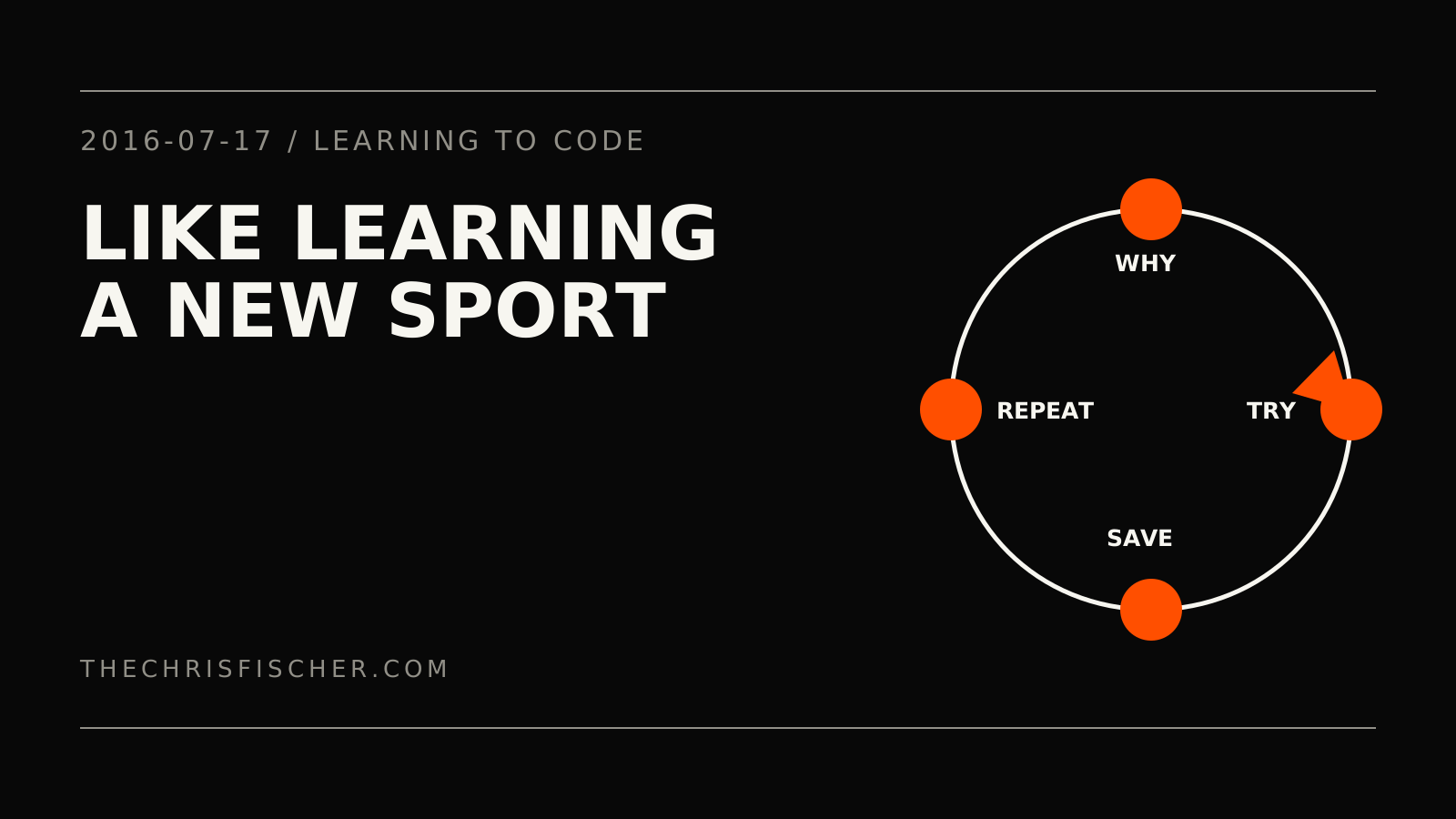
The beginning is still hard. A reason helps. If you know why you want to build something, it is easier not to quit when the first little program refuses to work.
My starting plan was basic.
Create a GitHub account so there is a place to save the things that finally work. Try a beginner course. Pick Python. Learn to recognize data structures, operators, loops, and conditions. Those ideas appear in every language even when the punctuation changes.
I included tiny examples. A list holding numbers and words. A dictionary with a name and an attribute. A loop printing each item. An if statement checking whether the list was longer than three things.
None of it was impressive software. That was the point. The first job was to see the parts move.
Python was the language I would choose if I had to start over. It was approachable, useful, and already handled most of the personal code I wanted to write.
The final instruction was probably the most important: use Google like crazy. Learning to write code includes reading other people's code, finding the same error somebody else already solved, trying the answer, and understanding a little more the next time.
I spent a lot of Saturdays and Sundays writing code on and off. I invited my friend into a small Slack group and offered to help if the experiment went anywhere.
Then I left it with him. Pick a reason. Try something. Save what works. Keep going.