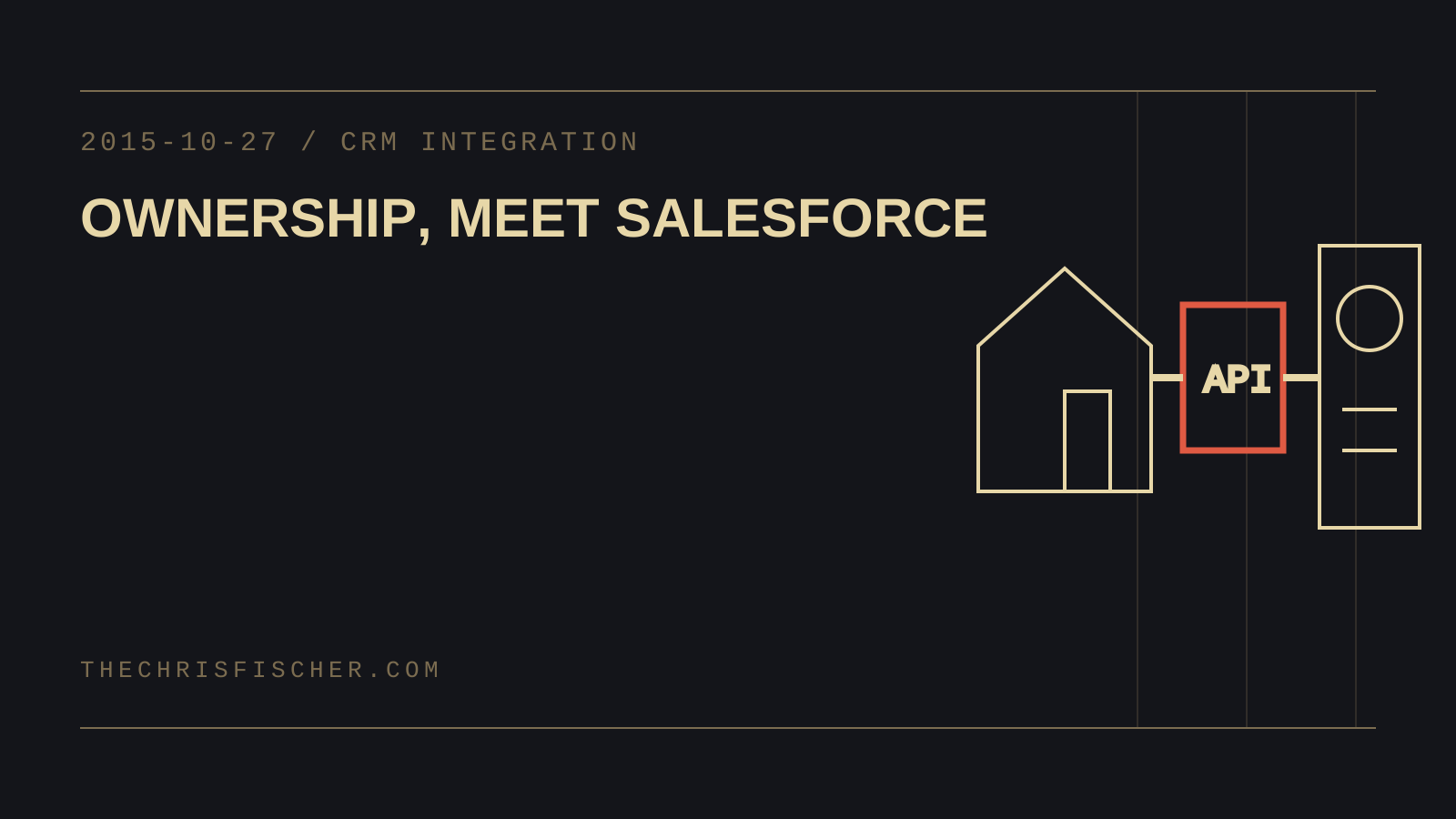
Give us a Reonomy property ID. We would send useful ownership matches back into Salesforce.
That was the proposed first data-integration point.
We had discussed what it would take internally and were clear about the small layer needed on top of the Reonomy API. The core data already existed. The new work was preparing and formatting it so a commercial real-estate team could use it inside Salesforce or Apto.
The first pass would return a short list of likely ownership matches for a property, along with the contact fields needed in the CRM. That gave us enough to test the object, run the query, and see whether the data landed in a format the customer could actually use.
The customer immediately asked whether the list could be longer. Sure. We could work out the right number after the first pass. The important part was proving the full path from property ID to a useful CRM record.
Earlier in the summer, the team had been trying to move new work onto the cleaner API path. This integration put that API into a concrete customer workflow. It was not an abstract platform exercise. Somebody wanted ownership information in the software where the rest of the sales work already happened.
I promised a proposal with the next steps and the proposed data format. There were still decisions to make about the response and how many matches belonged in it. No integration was finished yet.
The test was narrow enough to start: accept one property identifier, query the ownership data, format the result, and place it in the CRM. Then we could see what broke and what the customer asked for next.